Recipes
Stuffed Grape Leaves Recipe
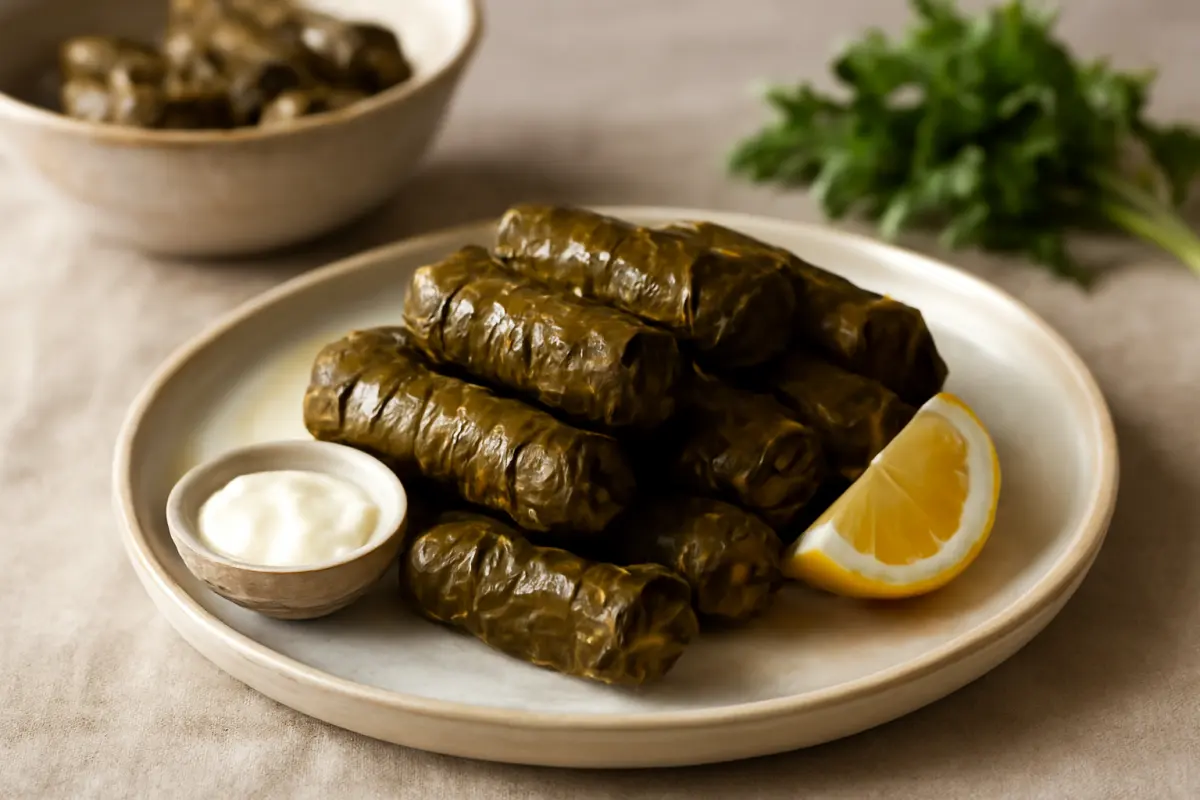
These stuffed grape leaves are filled with lemony rice, onion, parsley, dill, and mint, then gently simmered until the leaves are tender and the filling is fluffy. A layer of lemon slices and olive oil gives the finished dolmades bright, savory flavor.
Overview
These stuffed grape leaves are filled with uncooked rice, softened onion, fresh herbs, and lemon before they are rolled and gently simmered. The rice cooks inside the leaves, absorbing the lemony broth and olive oil as it becomes tender.
Use jarred grape leaves for convenience, or blanch fresh young leaves if you have them. The key to neatly rolled dolmades is keeping the filling modest and arranging the rolls snugly so they stay closed while they cook.
Ingredients
- 1 jar grape leaves, about 16 ounces, drained
- 1 1/2 cups long-grain white rice, rinsed until the water runs mostly clear
- 1 medium yellow onion, finely diced
- 1/4 cup extra-virgin olive oil, plus 2 tablespoons for the pot and serving
- 1/2 cup finely chopped fresh parsley
- 1/4 cup finely chopped fresh dill
- 2 tablespoons finely chopped fresh mint, or 2 teaspoons dried mint
- 2 tablespoons tomato paste
- 1 teaspoon kosher salt, plus more for blanching fresh leaves if needed
- 1/2 teaspoon freshly ground black pepper
- 1/2 teaspoon ground cumin, optional
- 2 tablespoons fresh lemon juice
- 1 lemon, thinly sliced
- 2 1/2 cups low-sodium vegetable broth or water
- Plain Greek yogurt and extra lemon wedges, for serving, optional
How to make it
Prepare the grape leaves. Drain the jarred leaves and separate them carefully. Place them in a large bowl, cover with boiling water, and let them stand for 5 minutes. Drain and rinse under cool water. This removes some of the brine and makes the leaves more flexible. Trim away any thick stems. If a leaf is torn, reserve it for lining the pot.
Make the filling. Warm 1/4 cup olive oil in a large skillet over medium heat. Add the diced onion and cook for 6 to 8 minutes, stirring occasionally, until soft and translucent but not browned. Stir in the rinsed rice, parsley, dill, mint, tomato paste, salt, pepper, and cumin if using. Cook for 2 minutes, stirring so the rice is coated and the tomato paste darkens slightly. Remove the skillet from the heat and stir in the lemon juice. The rice should still be completely uncooked at this stage.
Prepare the pot. Arrange the lemon slices over the bottom of a wide, heavy pot or Dutch oven. Cover them with any torn or unusable grape leaves. This protects the rolls from direct heat and adds lemon flavor to the cooking liquid.
Fill and roll the leaves. Lay one grape leaf flat with the vein side facing up and the stem end nearest you. Place about 1 tablespoon of filling in a short horizontal line near the stem end. Fold the bottom edge over the filling, fold both sides inward, and roll it toward the pointed end into a compact cylinder. Do not roll too tightly: the rice needs room to expand. Repeat with the remaining leaves and filling.
Arrange the rolls. Place the stuffed leaves seam-side down in the pot, packing them closely in a single layer when possible. Add a second layer if needed, keeping the rolls snug so they do not unravel. Drizzle the remaining 2 tablespoons olive oil over the top.
Add the cooking liquid. Pour the vegetable broth or water carefully down the side of the pot. The liquid should come about halfway up the rolls, not cover them completely. Place a heatproof plate upside down over the dolmades to keep them submerged and in place.
Simmer gently. Bring the liquid to a gentle simmer over medium heat, then reduce the heat to low. Cover the pot and cook for 45 to 55 minutes. Check after 45 minutes by carefully removing one roll and tasting the rice. The grape leaf should be tender enough to bite through easily, and the rice should be soft with no hard, chalky center. If the rice is still firm and the pot looks dry, add 1/4 cup hot water, cover, and continue cooking for 5 to 10 minutes.
Rest and serve. Turn off the heat and let the stuffed grape leaves rest, covered, for 15 minutes. Remove the plate with tongs or oven mitts. Serve warm or at room temperature with the pan juices, extra lemon wedges, and Greek yogurt if desired. The rolls are also excellent chilled after the flavors settle.
Expert tips
- Do not overfill the leaves. One tablespoon is enough for most medium leaves. Too much filling causes the rolls to split as the rice expands.
- Keep the simmer gentle. A hard boil can make the leaves tear and can scatter the filling. Look for small, steady bubbles around the edges of the pot.
- Use a plate as a weight. It keeps the rolls from floating, opening, or rubbing against each other while they cook.
- If the leaves taste very salty, soak them in fresh cool water for 20 to 30 minutes after rinsing, then drain well.
- For a meat version, replace 1/2 cup of the rice with 1/2 pound ground lamb or beef. Brown the meat with the onion first, cool the mixture briefly, and extend the covered simmer to about 60 minutes, checking that the meat reaches 160°F in the center of a roll.
- For a softer filling, use medium-grain rice instead of long-grain rice and begin checking for doneness around 40 minutes. Avoid parboiling the rice, since it can become mushy during the second cooking.
- If a leaf tears, overlap it with a second leaf or place the damaged side inside the roll. Small tears usually close as the rice cooks.
Serving and storage
Serve the rolls with lemon wedges, a drizzle of olive oil, or plain Greek yogurt. They make a good appetizer, light main course, or part of a larger Mediterranean-style spread alongside dishes such as this Greek moussaka recipe.
Cool leftover stuffed grape leaves promptly in a shallow, covered container and refrigerate within 2 hours of cooking. They keep for up to 4 days in the refrigerator. Reheat gently in a covered skillet with a splash of water or broth until hot throughout, or enjoy them cold. For longer storage, freeze cooled rolls in a sealed container for up to 2 months; thaw overnight in the refrigerator and reheat gently so the leaves do not dry out.
Frequently asked questions
Can I make stuffed grape leaves ahead of time?
Yes. Cook them up to 2 days ahead and refrigerate them in their cooking liquid. They can be served cold, at room temperature, or gently reheated in a covered skillet with a splash of water or broth.
Why did my stuffed grape leaves fall apart?
The leaves may have been rolled too loosely, overfilled, or cooked at a hard boil. Use about 1 tablespoon of filling, fold the sides in firmly, arrange the rolls seam-side down, and keep the pot at a gentle simmer.
Can I use brown rice instead of white rice?
You can, but brown rice needs more liquid and a longer cooking time, so the grape leaves may become overly soft before the rice is tender. White long-grain or medium-grain rice gives the most predictable result for this method.
Are stuffed grape leaves served hot or cold?
They can be served either way. Letting them rest after cooking makes them easier to handle, while chilling them overnight gives the lemon and herb flavors more time to develop.