Recipes
Thai Green Curry Recipe
This Thai green curry recipe makes four servings of tender chicken and crisp-tender vegetables in a fragrant coconut sauce. Use store-bought green curry paste for a practical weeknight dinner, then adjust the heat and seasoning to suit your table.
Overview
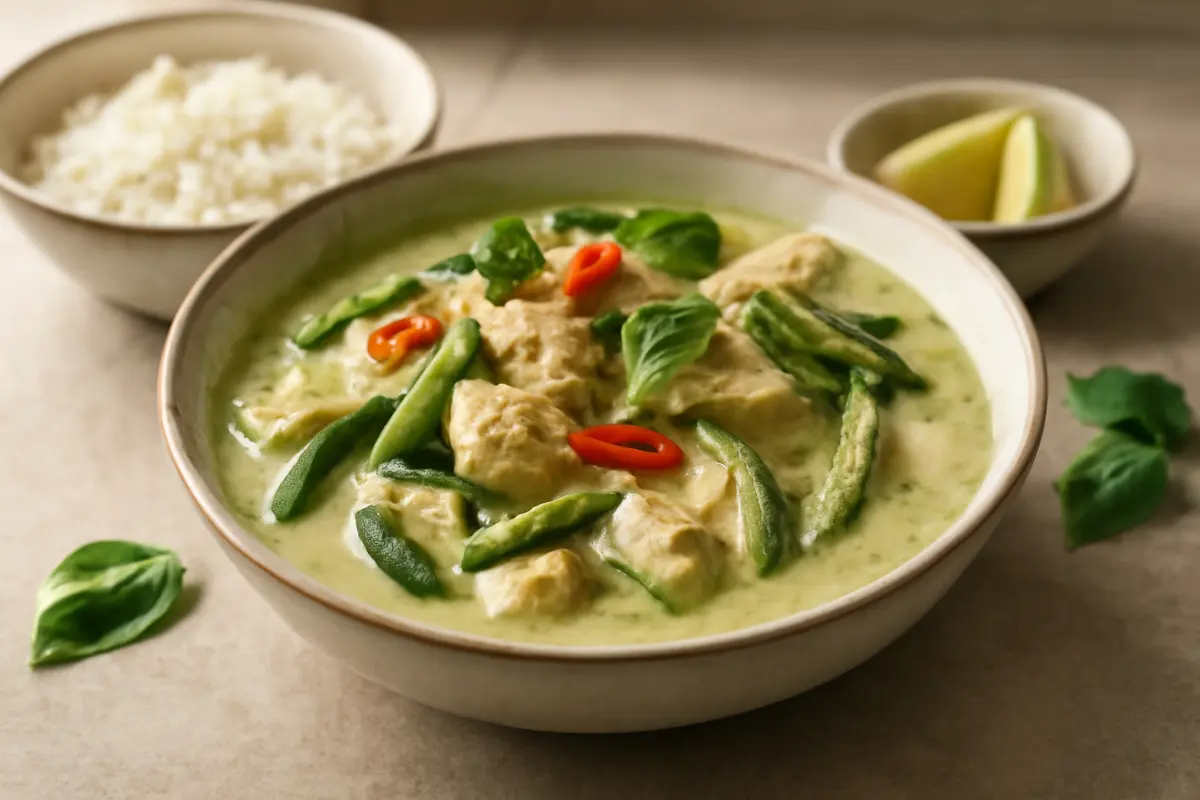
This Thai green curry combines chicken, coconut milk, green curry paste, vegetables, and fresh basil in one fragrant pan. The sauce should be creamy and pourable, with a balanced mix of spicy, salty, lightly sweet, and aromatic flavors.
The recipe serves four with steamed jasmine rice. Use boneless chicken thighs for the most forgiving result, or substitute chicken breast and reduce the simmering time so it stays tender.
Ingredients
- 2 tablespoons neutral oil, such as vegetable or canola oil
- 3 tablespoons Thai green curry paste, divided if you prefer to adjust the heat
- 1 can (13.5 ounces/400 milliliters) full-fat coconut milk, shaken well
- 1 cup (240 milliliters) low-sodium chicken stock or water
- 1 tablespoon fish sauce, plus more to taste
- 2 teaspoons packed light brown sugar or palm sugar
- 1 pound (450 grams) boneless, skinless chicken thighs, cut into 1-inch strips
- 1 red bell pepper, thinly sliced
- 1 small zucchini, cut into half-moons about 1/4 inch thick
- 1 cup (100 grams) trimmed green beans, cut into 2-inch pieces
- 4 makrut lime leaves, gently torn, or 1 tablespoon finely grated lime zest
- 1 cup loosely packed Thai basil leaves, plus extra for serving
- 1 tablespoon fresh lime juice, plus lime wedges for serving
- Steamed jasmine rice, for serving
How to make it
Prepare the ingredients. Cut the chicken and vegetables before heating the pan. Keep the coconut milk, stock, fish sauce, sugar, lime leaves, and basil close by because the curry cooks quickly once the paste is fragrant.
Fry the curry paste. Heat the oil in a large, deep skillet or saucepan over medium heat. Add the green curry paste and cook for 1 to 2 minutes, stirring constantly, until it smells noticeably more aromatic and the oil takes on a green-gold tint. Do not let the paste scorch; lower the heat if dark spots appear.
Build the sauce. Add about 1/2 cup of the coconut milk and stir until the paste is evenly dispersed. Simmer for 2 to 3 minutes, stirring occasionally, until the mixture looks slightly thicker and glossy. Add the remaining coconut milk, stock, fish sauce, sugar, and makrut lime leaves.
Cook the chicken. Bring the sauce to a gentle simmer, then add the chicken in a single layer as much as possible. Simmer uncovered for 5 minutes, stirring once or twice. The sauce should bubble gently rather than boil hard.
Add the vegetables. Stir in the green beans and bell pepper. Simmer for 3 minutes, then add the zucchini. Continue cooking for 3 to 5 minutes, until the chicken is cooked through and the vegetables are tender but still have some bite. The thickest piece of chicken should be opaque in the center and reach 165°F (74°C) if checked with an instant-read thermometer.
Finish the curry. Remove the pan from the heat. Stir in the Thai basil and lime juice. Taste the sauce after 30 seconds, once the basil has wilted, and adjust with more fish sauce for saltiness, sugar for balance, or lime juice for brightness. If the curry is hotter than you want, stir in a little extra coconut milk.
Serve. Spoon the curry over steamed jasmine rice and scatter with additional Thai basil. Serve lime wedges at the table. Remove the tough lime leaves before eating, or leave them in the pan as a visual reminder not to chew them.
Expert tips
- Control the heat: Green curry paste varies significantly by brand. Start with 2 tablespoons for a milder curry, then add the remaining tablespoon with the coconut milk if you want more heat and aroma.
- Choose the right coconut milk: Full-fat coconut milk gives the sauce the best body. If using a reduced-fat version, simmer the finished sauce for an extra 2 to 3 minutes, but do not boil it aggressively.
- Keep vegetables crisp: Add firm vegetables first and quick-cooking vegetables later. Broccoli florets, snow peas, bamboo shoots, or sliced eggplant can replace the listed vegetables; cut them into similarly sized pieces.
- Avoid a broken sauce: A little separation of coconut fat is normal, but hard boiling can make the sauce look greasy and cause the coconut milk to split. Keep the heat at a gentle simmer.
- If the curry tastes flat: Add fish sauce in 1/2-teaspoon increments, tasting after each addition. If it is salty but lacks freshness, add lime juice instead of more fish sauce.
- Chicken substitutions: Use 1 pound of peeled shrimp and add it during the final 3 to 4 minutes, cooking just until pink and firm. For tofu, use 14 ounces (400 grams) of firm tofu, pressed and cubed; pan-fry it separately if you want crisp edges, then add it during the final few minutes.
- No Thai basil: Substitute regular basil, adding it off the heat. The flavor will be different but still aromatic. Cilantro can be used as a garnish, though it does not replace the anise-like character of Thai basil.
Serving and storage
Serve the curry hot with jasmine rice. Steamed rice noodles or roti can also work, although they will give the meal a different texture.
Cool leftovers promptly in a shallow container and refrigerate within 2 hours. Store the curry and rice separately in airtight containers for up to 3 days. Reheat the curry gently in a saucepan over medium-low heat, stirring occasionally, until steaming hot throughout. Add a splash of water or coconut milk if the sauce has thickened. Reheat rice until steaming hot and do not repeatedly cool and reheat it.
Frequently asked questions
Can I make Thai green curry less spicy?
Yes. Start with 1 to 2 tablespoons of green curry paste instead of 3, and add more only after tasting the sauce. Extra coconut milk can soften the heat, but it may also dilute the saltiness, so taste again and adjust with fish sauce and lime juice.
Why is my Thai green curry watery?
Simmer it uncovered for a few extra minutes over medium-low heat so excess liquid evaporates. Avoid adding more stock, and use full-fat coconut milk for a thicker, creamier sauce.
Can I make this curry ahead of time?
You can cook it up to 3 days ahead and refrigerate it, although the vegetables will soften as they sit. For the freshest texture, prepare the sauce and chicken ahead, then add quick-cooking vegetables and basil while reheating.
What can I use instead of fish sauce?
Use an equal amount of light soy sauce for a vegetarian-friendly option, provided the curry paste itself contains no fish or shrimp ingredients. The flavor will be less rounded, so add a little extra lime juice to finish.