Recipes
Vegetable Soba Noodle Stir-Fry Recipe
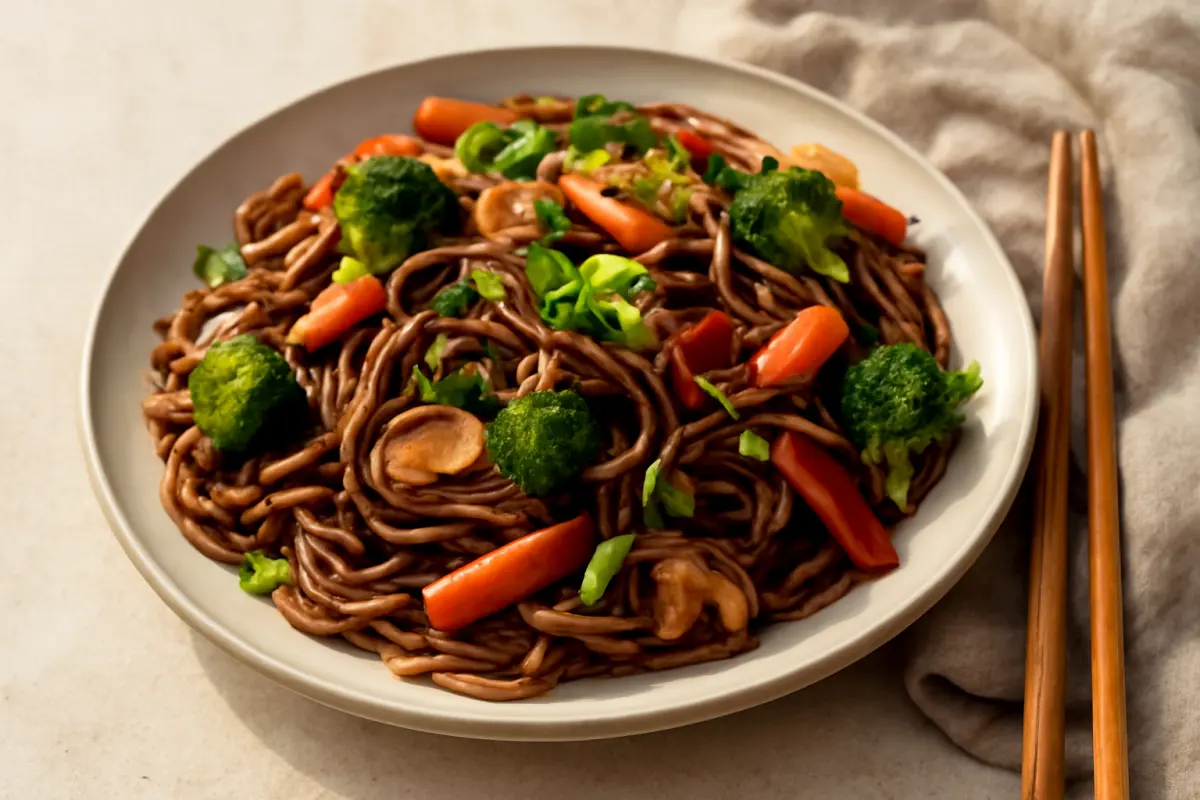
This vegetable soba noodle stir-fry combines chewy buckwheat noodles, crisp-tender vegetables, and a glossy soy-sesame sauce. Prep the sauce and vegetables before heating the pan so everything cooks quickly without turning soft.
Overview
This vegetable soba noodle stir-fry is a quick, flexible dinner with chewy noodles, colorful vegetables, and a savory sauce balanced with rice vinegar, sesame oil, and a little maple syrup. The vegetables are cooked in stages so firm carrots and broccoli soften without losing all their bite.
The recipe serves 4 and comes together in about 30 minutes. Cook the soba noodles separately, rinse them well, and add them to the pan only at the end. That keeps the noodles from becoming gummy while the sauce coats every strand.
Ingredients
- 8 ounces (225 g) dried soba noodles
- 2 tablespoons low-sodium soy sauce or tamari
- 1 tablespoon rice vinegar
- 1 tablespoon pure maple syrup or honey
- 1 tablespoon toasted sesame oil, divided
- 1 teaspoon grated fresh ginger
- 2 garlic cloves, finely grated or minced
- 1 tablespoon neutral cooking oil, such as avocado, canola, or grapeseed oil
- 1 medium carrot, peeled and cut into thin matchsticks
- 1 red bell pepper, thinly sliced
- 2 cups small broccoli florets
- 1 cup sugar snap peas, strings removed and sliced lengthwise if large
- 4 green onions, thinly sliced, with the white and green parts separated
- 1/4 teaspoon crushed red pepper flakes, optional
- 2 tablespoons roasted unsalted peanuts or cashews, roughly chopped, for serving
- 1 tablespoon toasted sesame seeds, for serving
- Lime wedges, optional
How to make it
Mix the sauce. In a small bowl, whisk together the soy sauce, rice vinegar, maple syrup, 1/2 tablespoon of the sesame oil, ginger, garlic, and red pepper flakes if using. The sauce should taste savory, lightly sweet, tangy, and aromatic. Set it beside the stove.
Cook the soba noodles. Bring a large pot of water to a boil. Add the soba and cook according to the package directions, usually 4 to 6 minutes, until the noodles are tender but still slightly springy in the center. Stir during the first minute to keep them from sticking.
Drain the noodles in a colander and rinse them under cold running water until they are cool and the surface starch is washed away. Drain thoroughly, then toss with the remaining 1/2 tablespoon sesame oil. Set aside while you stir-fry the vegetables.
Heat the pan. Place a large wok or 12-inch skillet over medium-high heat. Add the neutral oil and heat until it shimmers. The pan should be hot enough that a piece of carrot sizzles immediately when it touches the oil, but the oil should not be smoking.
Cook the firm vegetables first. Add the carrot, broccoli, and the white parts of the green onions. Stir-fry for 3 minutes, tossing or stirring every 20 to 30 seconds. The broccoli should turn bright green, and the carrot should begin to soften while retaining a little resistance when pierced with a fork.
Add the bell pepper and snap peas. Stir-fry for 2 to 3 minutes more, until the pepper is slightly softened and the peas are bright green and crisp-tender. If the vegetables begin to stick or brown too quickly, reduce the heat slightly and add 1 tablespoon of water.
Add the sauce and noodles. Reduce the heat to medium. Add the cooked soba and pour the sauce around the sides of the pan. Use tongs to lift and turn the noodles through the vegetables for 1 to 2 minutes, until they are hot and the sauce looks glossy rather than pooled at the bottom.
Taste before serving. Add another teaspoon of soy sauce for saltiness, a small splash of rice vinegar for brightness, or 1 to 2 teaspoons of water if the noodles look dry. Fold in most of the green parts of the green onions.
Divide the stir-fry among four bowls. Finish with the chopped peanuts or cashews, sesame seeds, the remaining green onions, and lime wedges if desired. Serve immediately while the noodles are springy and the vegetables are still crisp-tender.
Expert tips
- Rinse soba thoroughly. Surface starch makes noodles clump and can leave the stir-fry sticky. Cold water stops the cooking and separates the strands.
- Prepare everything before heating the pan. The vegetables and sauce cook quickly, so measuring ingredients during the stir-fry makes overcooked vegetables more likely.
- Use a wide pan. Crowding traps steam and softens the vegetables. If your skillet is small, stir-fry the vegetables in two batches and combine them with the noodles at the end.
- Keep the vegetables varied. Broccoli can be replaced with cauliflower florets, snap peas with green beans, and the bell pepper with thinly sliced cabbage. Cut replacements into similarly sized pieces so they finish together.
- Make it gluten-free carefully. Use 100% buckwheat soba if available and replace soy sauce with certified gluten-free tamari. Many soba noodles contain wheat, so check the package label.
- If the noodles clump: loosen them under warm water for a few seconds, drain well, and add them to the pan with 1 tablespoon of water. Toss gently rather than stirring aggressively.
- If the stir-fry is watery: keep the pan uncovered and toss for another minute or two over medium-high heat. Add the sauce gradually next time instead of pouring in all of it at once.
- For extra protein: add 8 ounces of thinly sliced firm tofu, cooked edamame, or a scrambled egg. For a tofu-focused variation, see this crispy tofu stir-fry recipe. If you prefer a different noodle shape, this vegetable lo mein recipe uses a similar prep-first stir-fry approach.
Serving and storage
Serve the soba stir-fry hot, with lime wedges and extra sesame seeds or chopped nuts. A small drizzle of chili oil can add heat at the table.
Refrigerate leftovers in a shallow, airtight container within 2 hours of cooking and use them within 3 days. The noodles will firm up as they chill. Reheat in a skillet over medium heat with 1 to 2 tablespoons of water, tossing until steaming hot throughout. A microwave also works: cover loosely, heat in short intervals, and stir between intervals. Avoid repeatedly reheating the same portion, as the noodles can become soft and the vegetables lose their texture.
Frequently asked questions
Can I make vegetable soba noodle stir-fry ahead of time?
Yes. Cook the noodles and vegetables up to 1 day ahead, refrigerate them separately, and combine them in a hot skillet with the sauce just before serving. This gives the noodles a better texture than storing the fully mixed stir-fry.
Why did my soba noodles turn mushy?
They were likely overcooked, insufficiently rinsed, or left simmering in the sauce. Cook them only until tender and springy, rinse them under cold water, and toss them into the stir-fry at the very end for 1 to 2 minutes.
Can I use regular noodles instead of soba?
Yes. Thin wheat noodles, whole-wheat spaghetti, rice noodles, or udon can work. Cook them according to their package directions, rinse or drain as appropriate, and adjust the final tossing time so they do not become soft.
What vegetables work best in this stir-fry?
Use vegetables that cook quickly when thinly sliced or cut into small florets, such as cabbage, mushrooms, zucchini, snow peas, asparagus, or baby corn. Add dense vegetables first and delicate vegetables later.
How can I add more protein?
Stir in cooked tofu, edamame, shredded rotisserie chicken, or a beaten egg. Cook raw protein completely in the pan before adding the vegetables, then return it to the skillet with the noodles.