Recipes
What to Eat With Pasta Salad: Large-Bowl Meal Recipe and Easy Sides
A hearty pasta salad can be the main dish when you add protein, crunchy vegetables, and a bright dressing. This large-bowl version serves six and pairs easily with roasted vegetables, fruit, or a simple drink.
Overview
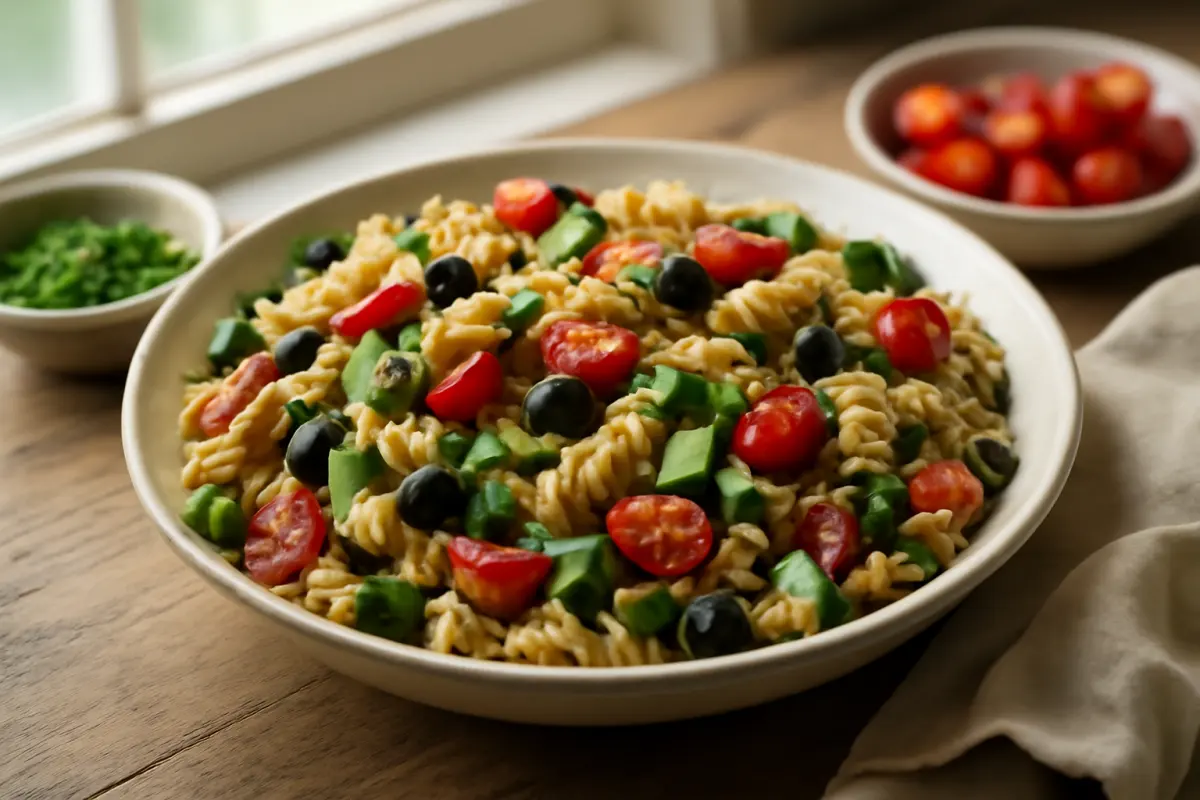
Pasta salad is easiest to serve as a complete meal when the bowl includes more than pasta and dressing. Add chickpeas for substance, fresh vegetables for crunch, feta for saltiness, and a sharp lemon-herb dressing to keep the flavors lively.
This large-bowl recipe serves six as a main dish or eight as a side. It works well for a casual lunch, picnic, potluck, or dinner alongside roasted vegetables and a cold drink. Serve it chilled or slightly cool rather than ice-cold, when the dressing can taste muted.
Ingredients
- 450 g (1 lb) short pasta, such as rotini, fusilli, bow ties, or penne
- 1 can (15 oz/425 g) chickpeas, drained and rinsed
- 1 large cucumber, about 250 g, halved lengthwise and sliced
- 250 g cherry tomatoes, halved
- 1 red bell pepper, finely chopped
- 100 g pitted black or Kalamata olives, halved
- 120 g feta cheese, crumbled
- 60 g finely chopped red onion
- 30 g fresh parsley, chopped
- 15 g fresh basil leaves, torn
- 80 ml extra-virgin olive oil
- 45 ml fresh lemon juice
- 1 tbsp red wine vinegar
- 1 small garlic clove, finely grated
- 1 tsp dried oregano
- 1 tsp Dijon mustard
- ¾ tsp fine salt, plus more for the pasta water
- ½ tsp freshly ground black pepper
Optional pairings
- 450 g mixed vegetables, cut into bite-size pieces, for roasting
- 1 tbsp olive oil, plus ¼ tsp salt, for the vegetables
- Lemon wedges, for serving
- Watermelon juice or another chilled, lightly sweet drink
How to make it
Prepare the dressing. Whisk the olive oil, lemon juice, red wine vinegar, garlic, oregano, Dijon mustard, salt, and black pepper in a small bowl. The dressing should taste a little sharper and saltier than you want the finished salad to taste; the pasta and vegetables will soften its intensity.
Cook the pasta. Bring a large pot of water to a rolling boil and salt it generously. Add the pasta and cook according to the packet directions, stopping when it is tender but still has a slight firmness in the center. This usually takes 1 minute less than the maximum cooking time.
Drain and cool the pasta. Drain thoroughly. Spread the pasta on a large rimmed tray or place it in a wide bowl for 5 minutes so excess steam can escape. Do not rinse unless you need to cool it very quickly; rinsing removes surface starch that helps the dressing cling.
Dress while slightly warm. Transfer the pasta to your largest mixing bowl and toss it with about two-thirds of the dressing. The pasta should look lightly coated, not flooded. Let it stand for 15 minutes, tossing once halfway through, so it absorbs some of the dressing.
Add the vegetables and chickpeas. Fold in the chickpeas, cucumber, tomatoes, bell pepper, olives, red onion, parsley, and basil. Use a broad spoon and turn the mixture gently so the tomatoes stay intact and the pasta does not break.
Finish the bowl. Add the feta and the remaining dressing. Toss again, then taste. Add up to ¼ tsp more salt, a squeeze of lemon, or another tablespoon of olive oil if the salad tastes flat or dry.
Chill briefly. Cover and refrigerate for 30 minutes before serving. Take it out 10 to 15 minutes before eating. If making it more than a few hours ahead, reserve 2 tablespoons of dressing and toss it through just before serving.
Add a warm side if desired. For roasted vegetables, heat the oven to 220°C/425°F. Toss 450 g chopped vegetables with 1 tbsp olive oil and ¼ tsp salt, spread them in one layer, and roast for 20 to 30 minutes. They are ready when the edges are browned and the thickest pieces are tender when pierced with a fork. Serve them warm or at room temperature beside the pasta salad.
Build the plate. Serve about 300 g of pasta salad per main-course portion. Pair it with roasted vegetables for a warm-and-cool meal, or add a simple chickpea salad for a fresh, plant-forward spread. A chilled glass of watermelon juice provides a refreshing contrast to the salty feta and olives.
Expert tips
- Use a wide bowl. A large, shallow bowl gives you room to toss without crushing the tomatoes or packing the pasta into a dense layer.
- Choose short pasta with ridges or curves. Fusilli and rotini hold dressing well; smooth spaghetti is more difficult to portion and tends to clump.
- Prevent watery salad. Pat the cucumber and rinsed chickpeas dry before adding them. If the tomatoes are especially juicy, remove some seeds.
- Fix dry pasta salad. Chilled pasta absorbs dressing. Add the reserved dressing one tablespoon at a time, tossing between additions.
- Fix a bland salad. Add lemon juice or vinegar first, then salt. A small amount of acidity usually wakes up the flavor more effectively than extra oil.
- Make it vegetarian-friendly. The recipe is vegetarian as written. For a dairy-free version, omit the feta and add ¼ cup toasted sunflower seeds or chopped almonds; season with a little extra salt.
- Make it more filling. Add 225 g chopped cooked chicken, tuna, or sliced grilled halloumi. Cool hot ingredients before mixing them into the salad.
- Swap ingredients realistically. Use white beans instead of chickpeas, grape tomatoes instead of cherry tomatoes, or baby spinach instead of parsley. Replace feta with small mozzarella pearls for a milder result.
Serving and storage
Serve the pasta salad in a large bowl with a serving spoon, or portion it into shallow bowls so the vegetables and chickpeas stay evenly distributed. It pairs well with roasted vegetables, grilled chicken, a simple green salad, or crusty bread. For another cold side, a small portion of potato salad works, but serve both salads in moderate portions because they are similarly rich and filling.
Refrigerate leftovers in a covered container within 2 hours of serving, or within 1 hour if the weather is hotter than 32°C/90°F. Use within 3 to 4 days. Keep the salad chilled during transport, and do not leave it sitting at room temperature for extended periods. Stir before serving and refresh with a little reserved dressing, lemon juice, or olive oil if the pasta has absorbed the coating.
Frequently asked questions
What is the best main dish to serve with pasta salad?
Pasta salad can be the main dish when it contains chickpeas, beans, cooked chicken, tuna, or cheese. If your pasta salad is mostly plain pasta and vegetables, serve it with grilled chicken, fish, roasted vegetables, or another protein-rich side.
How much pasta salad should I make per person?
Plan on about 75 g dry pasta per person for a main dish, or 50 to 60 g dry pasta per person as a side. The recipe uses 450 g dry pasta and serves six as a main meal or eight as a side.
Can pasta salad be made the day before?
Yes. Make it up to 24 hours ahead, but reserve about 2 tablespoons of dressing. Toss that dressing through the salad shortly before serving to restore moisture and brightness.
Why does my pasta salad taste dry?
Pasta continues absorbing dressing as it cools and chills. Toss in reserved dressing one tablespoon at a time, then taste before adding more salt or acid.
Should pasta salad be served cold or at room temperature?
Keep it refrigerated for food safety, but let it stand for 10 to 15 minutes before serving. Slightly cool pasta salad usually has more noticeable flavor than pasta salad served directly from the refrigerator.