Recipes
Clam Linguine Recipe
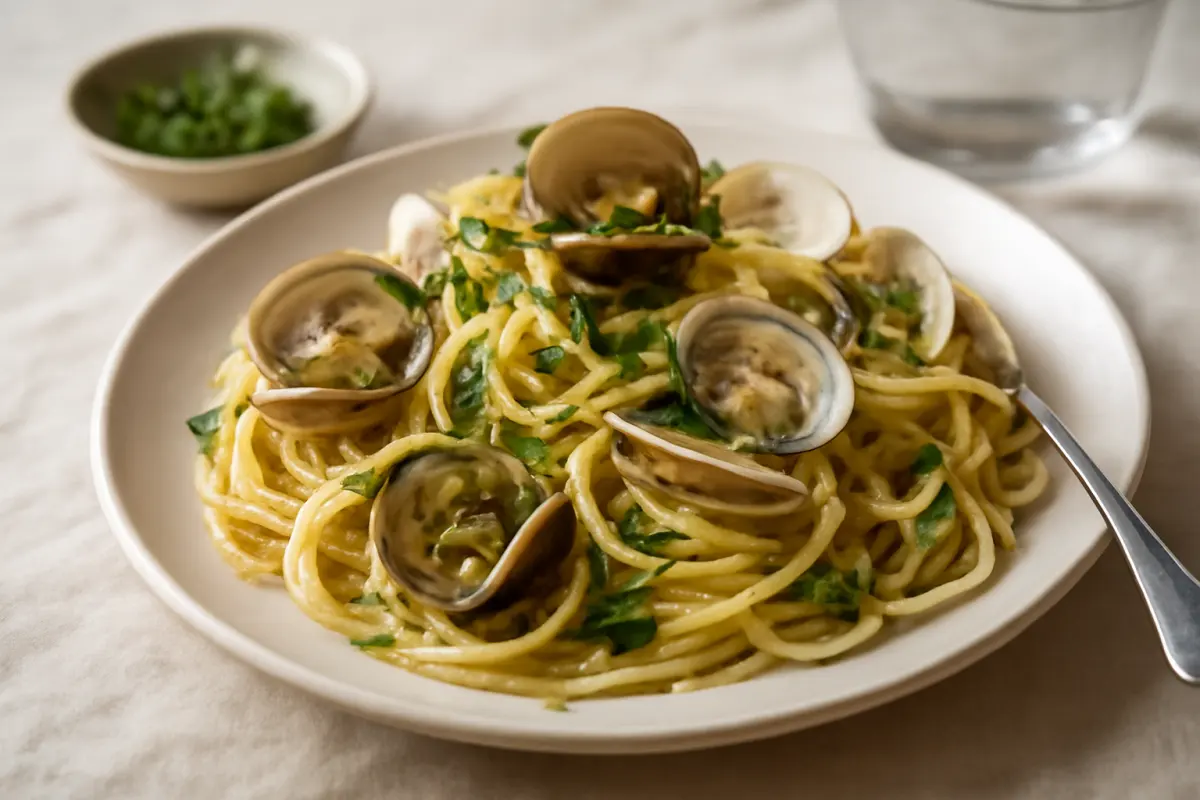
This clam linguine recipe pairs al dente pasta with a light garlic-and-white-wine sauce, briny clams, parsley, and a little lemon. Use fresh clams for the best texture, or make the practical canned-clam variation when needed.
Overview
This clam linguine recipe makes four generous servings of pasta coated in a savory, garlicky sauce. Fresh littleneck clams steam in white wine until they open, while reserved pasta water helps the olive oil, wine, and clam juices cling to every strand.
For convenience, you can use canned clams instead of fresh shellfish. The method and quantities are included below, so you can make the dish even when live clams are not available.
Ingredients
- 12 ounces linguine
- 2 tablespoons kosher salt, for the pasta water
- 2 tablespoons extra-virgin olive oil
- 4 tablespoons unsalted butter, divided
- 5 garlic cloves, thinly sliced
- 1/4 teaspoon red pepper flakes, or more to taste
- 1 cup dry white wine, such as Pinot Grigio or Sauvignon Blanc
- 2 pounds fresh littleneck clams, scrubbed and rinsed
- 1/2 teaspoon finely grated lemon zest
- 2 tablespoons fresh lemon juice
- 1/3 cup chopped fresh flat-leaf parsley, plus more for serving
- 1/4 teaspoon freshly ground black pepper
- 1/4 cup finely grated Parmesan, optional for serving
Canned-clam variation
Replace the fresh clams and white wine with two 6.5-ounce cans chopped clams, drained and 3/4 cup bottled clam juice. Add the canned clams only during the final 2 minutes of cooking so they warm through without becoming rubbery.
How to make it
Prepare the fresh clams. Place the clams in a colander and rinse them under cold running water, rubbing the shells to remove grit. Discard any cracked shells. Tap open clams firmly on the counter; if they do not close after a few seconds, discard them. Keep the clams cold while you prepare the other ingredients.
Boil the linguine. Bring 4 quarts of water to a boil in a large pot. Add the 2 tablespoons kosher salt, then add the linguine. Cook according to the package directions until the pasta is about 1 minute shy of al dente. It should still have a firm, slightly chalky center when bitten. Before draining, scoop out 1 1/2 cups of the pasta water. Drain the linguine; do not rinse it.
Start the sauce. While the pasta cooks, heat the olive oil and 2 tablespoons of the butter in a large, deep skillet or Dutch oven over medium heat. Add the sliced garlic and red pepper flakes. Cook for 1 to 2 minutes, stirring often, until the garlic is fragrant and pale golden. Do not let it turn dark brown, or it may taste bitter.
Steam the clams. Pour in the white wine and bring it to a lively simmer. Add the clams, cover the pan, and cook for 5 to 8 minutes, shaking the pan once or twice. The clams are ready when their shells have opened and the liquid smells briny and winey. Transfer opened clams to a bowl with tongs as they finish so they do not overcook. Discard any clams that remain closed after cooking.
Strain the cooking liquid if needed. If the clams released visible sand or grit, pour the liquid through a fine-mesh strainer lined with a damp coffee filter or a clean piece of cheesecloth. Return the strained liquid to the skillet. If it looks clean, you can leave it in the pan.
Emulsify the pasta and sauce. Add the drained linguine to the skillet with 1/2 cup of the reserved pasta water. Increase the heat to medium-high and toss continuously for 1 to 2 minutes. Add more pasta water, 2 tablespoons at a time, if the pan looks dry. The sauce should become glossy and lightly coat the noodles rather than pool thinly at the bottom.
Finish the dish. Remove the skillet from the heat. Stir in the remaining 2 tablespoons butter, lemon zest, lemon juice, parsley, and black pepper. Add the clams and toss gently. Taste before adding more salt; the clams and their cooking liquid may already be quite salty. For the canned-clam variation, stir in the drained clams during this step and warm for about 2 minutes.
Serve immediately. Divide the linguine among four shallow bowls. Spoon the clams and sauce over the top, scatter with extra parsley, and offer Parmesan at the table if desired. The pasta is best while the sauce is loose and glossy.
Expert tips
- Buy clams that smell clean and ocean-like, not strongly fishy. Shells should be closed, or close when tapped.
- Do not overcrowd the pan. A wide skillet gives the clams room to steam evenly and makes it easier to spot unopened shells.
- Reserve pasta water before draining. Its starch helps the sauce cling to the linguine and is more useful than adding extra oil.
- If the sauce tastes too salty, toss in a little more unsalted cooked pasta and a splash of plain pasta water. Do not add Parmesan until you have tasted the finished sauce.
- If the pasta is dry, add reserved pasta water gradually while tossing over heat. If it is watery, keep tossing for another minute so the starch and butter can bind the liquid.
- If the garlic browns too quickly, lower the heat and add the wine immediately. Burnt garlic cannot be rescued by adding more liquid.
Serving and storage
Serve clam linguine as soon as it is finished, with lemon wedges and a simple green salad or steamed vegetables. Crusty bread is useful for soaking up the remaining sauce.
Refrigerate leftovers in a covered container within 2 hours of cooking and use them within 2 days. Reheat gently in a skillet over low to medium-low heat with 1 to 2 tablespoons of water or clam juice, tossing until hot. Avoid prolonged reheating, which can make the clams and pasta tough. Freezing is not recommended because the pasta can become soft and the clams chewy.
Frequently asked questions
Can I make clam linguine without white wine?
Yes. Replace the 1 cup of white wine with 1 cup bottled clam juice or low-sodium chicken stock plus 1 tablespoon lemon juice. The sauce will taste slightly different but will still work well with the garlic, butter, parsley, and clams.
Why are some of my clams still closed after cooking?
Discard clams that remain closed after steaming. They may have been dead before cooking or may not be safe to eat. Do not force the shells open.
Can I use canned clams for this recipe?
Yes. Use two 6.5-ounce cans of chopped clams and 3/4 cup bottled clam juice. Warm the clams during the final 2 minutes rather than simmering them for the full steaming time.
Should I serve Parmesan with clam linguine?
Parmesan is optional. Many people prefer the clean briny flavor without cheese, but a small amount can add savory richness. Taste the pasta first because both Parmesan and clam liquid contribute salt.
How do I remove sand from fresh clams?
Rinse and scrub the shells, then strain the finished cooking liquid through a fine-mesh strainer lined with a damp coffee filter or cheesecloth if it contains grit. This keeps the sandy sediment out of the sauce.