Recipes
Coconut Shrimp Recipe
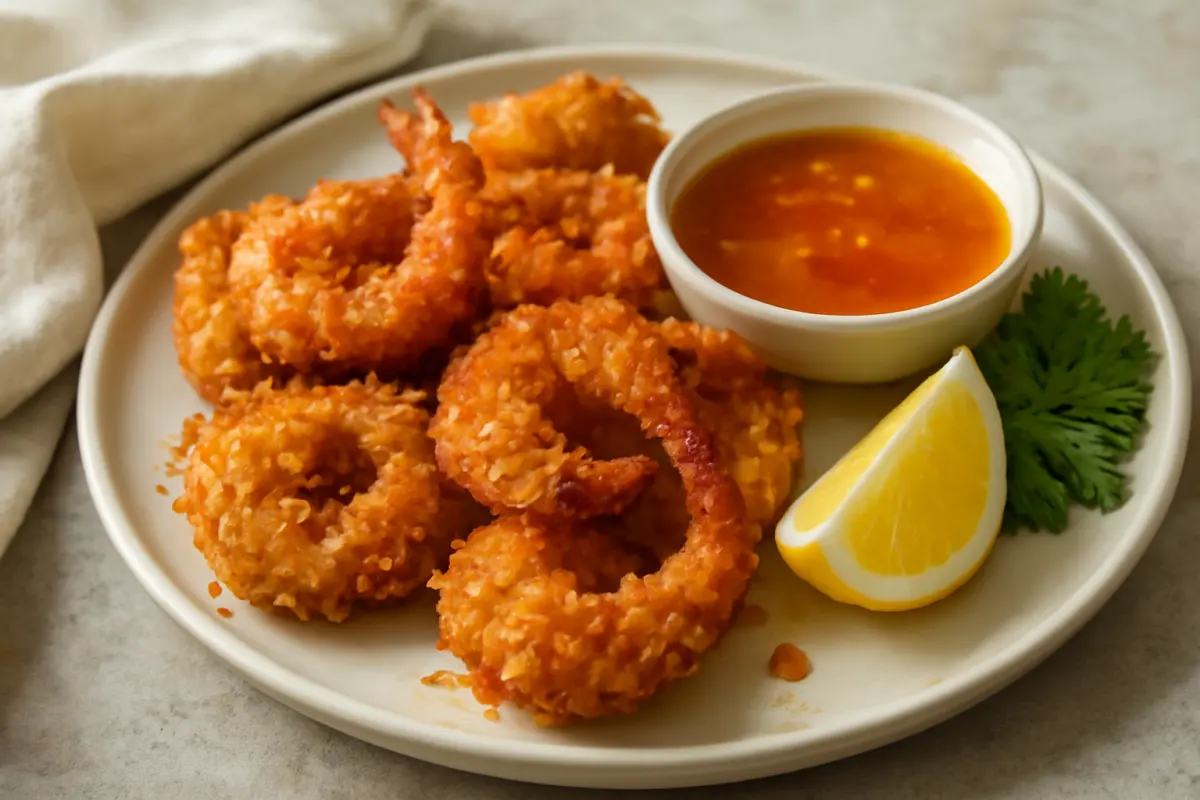
This coconut shrimp recipe coats large shrimp in seasoned flour, egg, panko, and sweetened shredded coconut, then fries them until crisp and golden. Serve with sweet chili sauce, lime, or your favorite dipping sauce.
Overview
This coconut shrimp recipe makes crisp, golden shrimp with a lightly sweet coconut coating and a juicy center. Large shrimp are dipped in seasoned flour, egg, and a mixture of panko breadcrumbs and shredded coconut so the crust clings well and stays crunchy.
Serve the shrimp hot with sweet chili sauce, lime wedges, or a creamy dipping sauce. The recipe uses a shallow pan of oil for quick frying, but oven and air-fryer directions are included if you prefer not to fry.
Ingredients
- 1 pound large shrimp, 16 to 20 per pound, peeled and deveined, tails left on if desired
- 1 teaspoon kosher salt, divided
- 1/2 teaspoon freshly ground black pepper, divided
- 1/2 cup all-purpose flour
- 2 large eggs
- 1 tablespoon water
- 1 cup panko breadcrumbs
- 1 cup unsweetened shredded coconut
- 1/2 teaspoon paprika
- 1/4 teaspoon garlic powder
- 1/4 teaspoon cayenne pepper, optional
- 1 1/2 cups neutral oil, such as canola, vegetable, or peanut oil, for shallow frying
- 1/2 cup sweet chili sauce, for serving
- 1 lime, cut into wedges, for serving
How to make it
Prepare the shrimp. Pat the shrimp thoroughly dry with paper towels. Moisture can make the coating slide off and cause the oil to splatter. If the shrimp are very large, make a few shallow cuts across the underside so they stay flatter as they cook. Season with 1/2 teaspoon salt and 1/4 teaspoon black pepper.
Set up the coating stations. Place the flour in a shallow bowl. In a second bowl, whisk the eggs with 1 tablespoon water until smooth. In a third bowl, combine the panko, shredded coconut, paprika, garlic powder, cayenne, remaining 1/2 teaspoon salt, and remaining 1/4 teaspoon black pepper.
Coat the shrimp. Working one shrimp at a time, dredge it in flour and shake off the excess. Dip it into the egg, letting the extra drip back into the bowl. Press it firmly into the coconut-panko mixture, turning to cover all sides. Set the coated shrimp on a wire rack or parchment-lined plate. Do not stack them.
Heat the oil. Pour the oil into a large, heavy skillet to a depth of about 1/4 inch. Heat over medium-high heat until it reaches 350°F. If you do not have a thermometer, drop in a few panko crumbs; they should sizzle immediately and rise gently, but the oil should not smoke.
Fry in batches. Carefully place the shrimp in the hot oil, leaving space between them. Fry for 2 to 3 minutes on the first side, then turn and fry for 1 to 2 minutes more. The coating should be deep golden, and the shrimp should be opaque and firm in the thickest part. Avoid crowding the pan, which lowers the oil temperature and produces greasy coating.
Drain and season. Transfer the cooked shrimp to a wire rack set over a baking sheet or to a paper towel-lined plate. Let the oil return to 350°F before frying the next batch. Taste one shrimp and add a small pinch of salt while it is still hot if needed.
Serve. Serve immediately with sweet chili sauce and lime wedges. For a fuller meal, add rice, a crisp slaw, or steamed vegetables.
Oven method
Heat the oven to 425°F and line a baking sheet with parchment. Arrange the coated shrimp in a single layer and lightly spray or brush both sides with oil. Bake for 10 to 12 minutes, turning once halfway through, until the coating is crisp and the shrimp are opaque. The crust will be lighter and somewhat less crunchy than fried shrimp.
Air-fryer method
Preheat an air fryer to 400°F. Lightly spray the coated shrimp with oil and arrange them in a single layer. Cook for 8 to 10 minutes, turning after 5 minutes, until golden and opaque. Cook in batches if necessary so air can circulate around each shrimp.
Expert tips
- Use dry shrimp: Thaw frozen shrimp completely in the refrigerator, then pat them dry. Partially frozen or wet shrimp make loose, patchy breading.
- Choose unsweetened coconut: Sweetened coconut can brown too quickly and make the coating overly sugary. If it is all you have, reduce the frying heat slightly and watch it closely.
- Keep one hand dry: Use one hand for the flour and coconut mixture and the other for the egg. This prevents thick, sticky fingers and makes coating faster.
- Prevent burnt coconut: If the coating darkens before the shrimp are cooked, reduce the heat to medium. Coconut browns faster than panko.
- For a gluten-free version: Use gluten-free flour and gluten-free panko. Check the labels on the coconut and dipping sauce as well.
- For a dairy-free version: No dairy is needed in this recipe. Use a neutral plant-based dipping sauce if serving something other than sweet chili sauce.
- If the coating falls off: The shrimp were likely too wet, or the flour and egg layers were too thick. Pat the shrimp dry, shake off excess flour, and press the final coating firmly into place.
- Check doneness without overcooking: The shrimp should curl into a loose C shape and look opaque throughout. A tight O shape usually indicates they have cooked too long.
Serving and storage
Coconut shrimp are best served immediately, while the coating is crisp. Keep the dipping sauce in a separate bowl so the crust does not soften. Leftovers can be refrigerated in a covered container for up to 2 days.
To reheat, place the shrimp on a rack over a baking sheet and warm at 400°F for 6 to 8 minutes, or use a 375°F air fryer for 3 to 5 minutes. Avoid microwaving if possible because it makes the coating soft. Do not leave cooked shrimp at room temperature for more than 2 hours, or more than 1 hour in very hot conditions.
Frequently asked questions
Can I use frozen shrimp for coconut shrimp?
Yes. Thaw the shrimp completely in the refrigerator or under cold running water, then drain and pat them very dry before coating. Do not coat shrimp while they are still icy.
Why is my coconut shrimp coating falling off?
Excess moisture, too much flour, or insufficient pressure when applying the final coating can cause this. Dry the shrimp well, shake off loose flour, let excess egg drip away, and press the coconut-panko mixture firmly onto each shrimp.
Can I make coconut shrimp ahead of time?
You can coat the shrimp up to 1 hour ahead and refrigerate them in a single layer. Fry or bake them just before serving for the crispest coating. Fully cooked shrimp are best eaten the same day, although leftovers keep refrigerated for up to 2 days.
What sauce goes with coconut shrimp?
Sweet chili sauce is the simplest pairing. Lime wedges, mango salsa, spicy mayonnaise, or a sauce made from mayonnaise, lime juice, and a little hot sauce also work well.