Recipes
Crispy Onion Bhaji Recipe
These onion bhajis are crisp and deeply golden outside, tender with sweet onion inside, and easy to make with gram flour, spices and a little water.
Overview
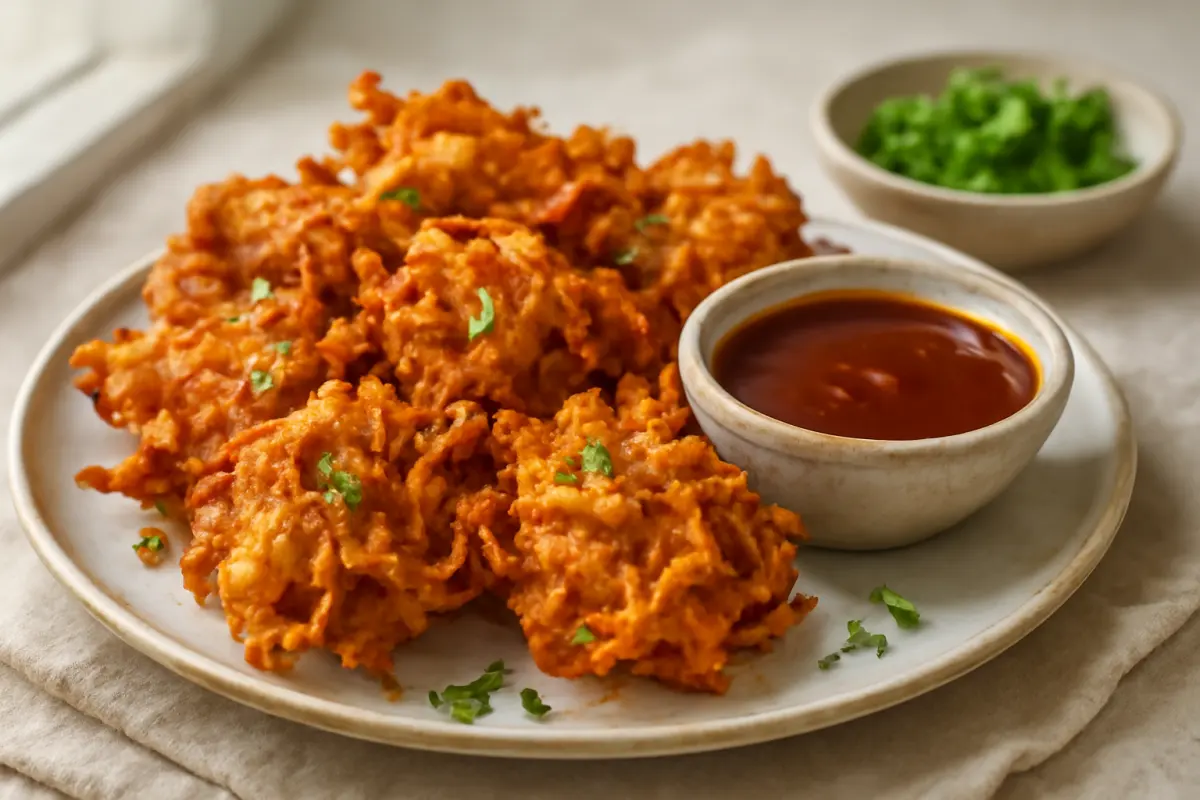
These crispy onion bhajis are made with thinly sliced onions tossed in gram flour, green chilli and warm spices. The mixture should hold together loosely rather than form a pourable batter, which helps each bhaji develop lacy, crunchy edges as it fries.
Serve them hot with chutney, yogurt sauce or alongside a curry. The recipe makes about 12 small bhajis and works best when the onions are sliced thinly and the oil stays at a steady frying temperature.
Ingredients
- 2 medium yellow onions, about 350 g total, peeled and thinly sliced
- 120 g gram flour, also called chickpea flour or besan
- 1 teaspoon ground cumin
- 1 teaspoon ground coriander
- 1/2 teaspoon turmeric
- 1/2 teaspoon Kashmiri chilli powder or mild paprika
- 1/4 teaspoon baking powder
- 1 teaspoon fine salt, plus more to taste
- 1 green chilli, finely chopped; remove the seeds for less heat
- 2 tablespoons chopped fresh coriander
- 80–100 ml cold water, added gradually
- Vegetable, sunflower or rapeseed oil, for deep-frying; enough to fill a heavy saucepan by 5–7 cm
- Lemon wedges, chutney or plain yogurt, to serve
How to make it
Prepare the onions. Put the sliced onions in a large bowl and separate the strands with your fingers. Add the salt and gently squeeze and toss the onions for 1–2 minutes. They should soften slightly and release a little moisture, but they should not become wet or mushy.
Mix the dry ingredients. Add the gram flour, cumin, ground coriander, turmeric, chilli powder and baking powder to the onions. Toss until the flour coats the strands evenly. Stir in the chopped green chilli and fresh coriander.
Add water carefully. Add 80 ml of the water and mix with your hands or a fork. The mixture should be thick and shaggy, with just enough moisture for the onions and flour to cling together. Add the remaining 20 ml only if dry pockets of flour remain. Leave the mixture for 5 minutes; the onions will release more moisture as it rests. Do not turn it into a smooth batter.
Heat the oil. Pour the oil into a heavy, deep saucepan, leaving at least 8 cm of space above it to allow for bubbling. Heat to 175–180°C. If you do not have a thermometer, drop in a small piece of mixture: it should rise promptly and sizzle actively, becoming golden in about 2–3 minutes. If it sinks without much bubbling, the oil is too cool; if it darkens immediately, the oil is too hot.
Shape the bhajis. Scoop out roughly 1 heaped tablespoon of the mixture for each bhaji. Gently compress it between your fingers into a loose, craggy mound. Do not make the portions too thick, or the centers may stay doughy while the outside browns.
Fry in batches. Carefully lower 3–4 bhajis into the oil, leaving space between them. Fry for 3–4 minutes, turning once or twice with a slotted spoon, until the outsides are deep golden brown and the edges look crisp. The oil should bubble steadily around each bhaji; a sudden drop in bubbling usually means the pan is overcrowded.
Drain and check. Transfer the cooked bhajis to a wire rack set over a tray, or to a plate lined with paper towels. Break one open after it has cooled for a minute. The center should be tender and cooked through, with no paste-like floury patch. If it is still soft and wet, return the bhajis to the oil for another 30–60 seconds.
Finish the batch. Bring the oil back to 175–180°C before frying the next batch. Serve the bhajis as soon as possible with lemon wedges, chutney or yogurt. A small sprinkle of salt while they are hot is optional.
Expert tips
- For extra crisp edges: Keep the mixture relatively dry and craggy. Too much water creates a smooth coating that can turn heavy rather than lacy.
- For evenly cooked bhajis: Slice the onions thinly and keep each portion small. Large, tightly packed mounds brown outside before the centers cook.
- If the mixture will not hold together: Rest it for 5 minutes first. If it is still loose, mix in 1 tablespoon gram flour at a time. Avoid adding lots of flour at once, which can make the bhajis dense.
- If the bhajis absorb oil: The oil is probably too cool, or too many bhajis were added at once. Fry fewer at a time and wait for the oil to return to temperature.
- If they brown too quickly: Lower the heat and let the oil return to about 175°C. Very dark outsides with raw centers usually indicate oil that is too hot or portions that are too thick.
- Substitutions: Gram flour gives the most characteristic flavor, but chickpea flour is the same ingredient under another name. Use mild paprika instead of Kashmiri chilli powder, or omit the green chilli for a milder batch. Rice flour can replace up to 2 tablespoons of the gram flour for a slightly crisper texture, but replacing all of it will change the texture and flavor.
- For an oven-style alternative: Spoon small portions onto a generously oiled baking tray and bake at 220°C fan/240°C conventional for about 20–25 minutes, turning once. They will be browned and firm but not as crisp as deep-fried bhajis.
Serving and storage
Serve onion bhajis immediately for the crispest texture. They pair well with mint chutney, mango chutney, tamarind sauce or a yogurt dip, and can also be served as a starter alongside a curry such as vegetable tikka masala.
Cool leftovers quickly and refrigerate them in a covered container for up to 2 days. Reheat them on a wire rack in a 200°C fan/220°C conventional oven for 8–12 minutes, until hot and crisp again. Avoid sealing them while warm, as trapped steam softens the coating. Do not leave cooked bhajis at room temperature for extended periods.
Frequently asked questions
Why are my onion bhajis not crispy?
The mixture may contain too much water, the oil may be too cool, or the pan may be overcrowded. Keep the mixture thick and shaggy, fry at 175–180°C, and cook only 3–4 bhajis at a time so the oil can stay hot.
Can I make onion bhaji without gram flour?
Gram flour is the traditional base and gives the bhajis their flavor and structure. If necessary, use chickpea flour, which is the same ingredient under a different name. Plain wheat flour will produce a different, heavier coating.
How do I stop onion bhajis from falling apart?
Slice the onions thinly, squeeze them with the salt, and rest the mixture for 5 minutes before shaping. Add water gradually and compress each portion gently into a loose mound before lowering it into the oil.
Can I prepare the bhaji mixture ahead of time?
You can slice the onions and mix the dry ingredients ahead, but combine them with salt and water shortly before frying. The onions continue releasing moisture as they sit, which can make the mixture loose and the bhajis less crisp.
How should I reheat leftover onion bhajis?
Reheat them on a wire rack in a 200°C fan/220°C conventional oven for 8–12 minutes. This lets hot air circulate around the bhajis and is better for restoring crispness than microwaving.