Recipes
Falafel Recipe
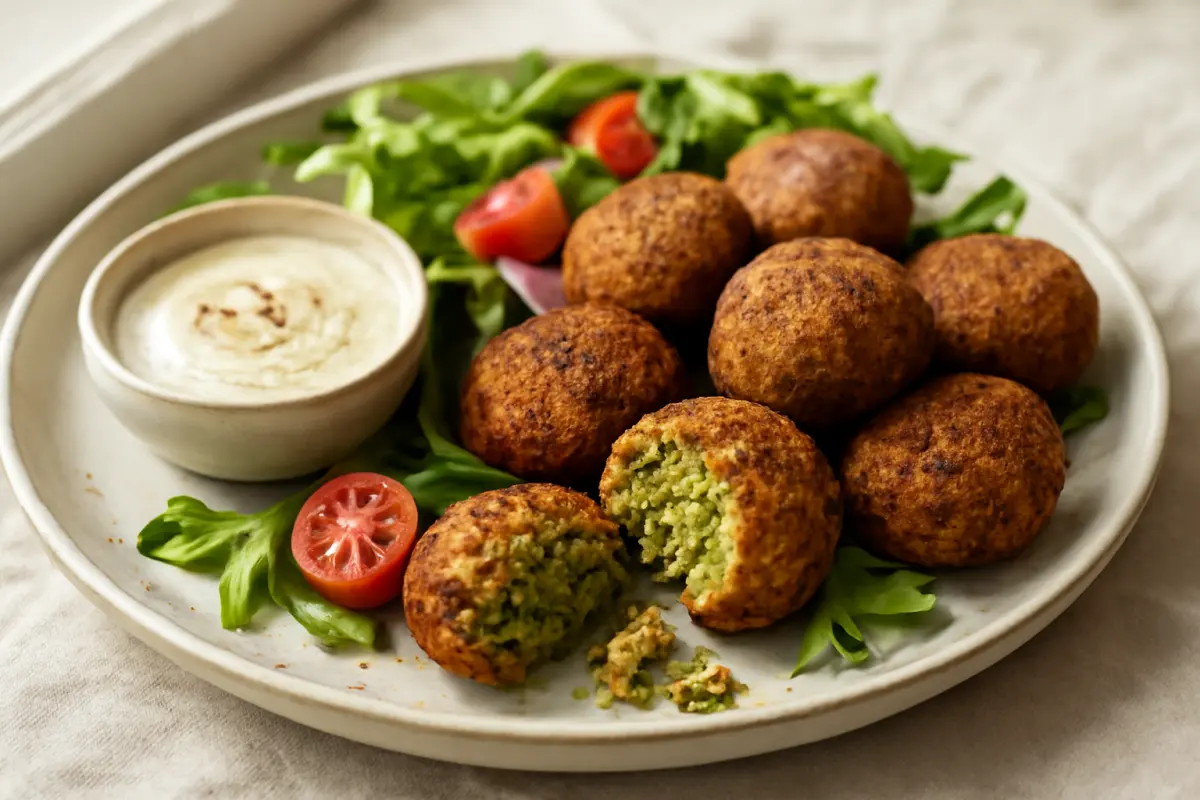
This falafel recipe uses soaked dried chickpeas rather than canned beans for a sturdy mixture that fries crisp on the outside and stays tender inside. Fresh herbs, onion, garlic, cumin, and coriander bring the mixture its savory flavor.
Overview
These falafel are made with dried chickpeas soaked overnight, then ground with fresh herbs, onion, garlic, and warm spices. The mixture should be coarse and slightly crumbly rather than smooth like hummus, which helps the falafel develop craggy, crisp edges when fried.
The recipe makes about 24 falafel, enough for four servings. Give the shaped mixture time to chill before cooking; this makes it easier to handle and reduces the chance of the falafel breaking apart in the oil.
Ingredients
- 250 g (1¼ cups) dried chickpeas, not canned
- ½ teaspoon baking soda, for the soaking water
- 1 small yellow onion, roughly chopped
- 4 garlic cloves, roughly chopped
- 30 g (1 packed cup) fresh parsley leaves and tender stems
- 15 g (½ packed cup) fresh cilantro leaves and tender stems
- 2 teaspoons ground cumin
- 2 teaspoons ground coriander
- 1 teaspoon kosher salt, plus more for serving if needed
- ½ teaspoon black pepper
- ¼ teaspoon cayenne pepper, optional
- 1 teaspoon baking powder
- 2 tablespoons plain flour or chickpea flour, plus more only if needed
- 1 tablespoon fresh lemon juice
- 1 to 2 tablespoons cold water, only if the mixture needs help blending
- 1 litre neutral frying oil, such as sunflower, canola, or peanut oil
How to make it
Soak the chickpeas. Put the dried chickpeas in a large bowl and cover them with at least 7.5 cm (3 inches) of cold water. Stir in the baking soda and leave the chickpeas at room temperature for 12 to 18 hours. They should be fully plump and easy to split with your fingers. Drain them thoroughly and rinse under cold water. Do not use cooked or canned chickpeas for this method; they contain too much moisture and can make the falafel fall apart.
Dry the chickpeas well. Spread the drained chickpeas on a clean kitchen towel and pat them dry. A little surface moisture is fine, but they should not be wet. Excess water makes a loose mixture and dulls the crust.
Process the vegetables and herbs. Add the onion, garlic, parsley, and cilantro to a food processor. Pulse 8 to 10 times, scraping the bowl once, until finely chopped but not pureed. Transfer the mixture to a bowl.
Grind the chickpeas. Add the drained chickpeas to the food processor with the cumin, coriander, salt, black pepper, and cayenne, if using. Pulse in short bursts until the chickpeas look like coarse, damp sand. Stop before the mixture becomes a smooth paste. When pressed between your fingers, it should hold together but still show tiny pieces of chickpea.
Combine and season. Return the herb mixture to the processor. Add the baking powder, flour, lemon juice, and 1 tablespoon of cold water. Pulse 3 to 5 times, just long enough to combine. If the mixture still looks dry and will not hold when squeezed, add the remaining tablespoon of water. Taste a small amount and adjust the salt if needed.
Chill the mixture. Cover and refrigerate for at least 30 minutes and up to 24 hours. The mixture will firm up as it rests. If it remains very wet after chilling, mix in 1 tablespoon of flour at a time until a squeezed portion holds its shape without feeling sticky.
Shape the falafel. Line a tray with parchment. Use a tablespoon or small cookie scoop to portion the mixture into 24 pieces, about 30 g each. Roll each portion into a ball, then gently flatten it into a thick patty about 4 cm (1½ inches) wide. Compact the mixture firmly enough that there are no visible cracks, but do not compress it into a dense ball.
Heat the oil. Pour the oil into a heavy, deep saucepan so it reaches a depth of at least 5 cm (2 inches), leaving plenty of space below the rim. Heat to 175°C (350°F). If you do not have a thermometer, drop in a small crumb of mixture: it should bubble steadily and rise, but it should not darken immediately.
Fry in batches. Carefully lower 5 or 6 falafel into the oil, leaving space between them. Fry for 3 to 4 minutes, turning once or twice, until deeply golden brown and crisp on all sides. The center should feel firm when gently pressed, and the inside should be green-flecked, tender, and cooked through rather than wet or pasty.
Drain and serve. Transfer the cooked falafel to a wire rack set over a tray, or to a plate lined with paper towels. Let the oil return to 175°C (350°F) before frying the next batch. Serve hot or warm with flatbread, salad, pickles, tahini sauce, or yogurt sauce.
Expert tips
- For a mixture that falls apart: The chickpeas may have been too wet, the mixture may be too coarse, or the falafel may be under-shaped. Chill it longer, mix in 1 tablespoon of flour, and press each portion together firmly before frying. Test one falafel first.
- For greasy falafel: The oil is probably too cool. Fry smaller batches and bring the oil back to 175°C (350°F) between batches.
- For dark outsides and raw centers: The oil is too hot or the patties are too thick. Lower the heat and shape flatter portions.
- For a dense texture: Avoid over-processing the chickpeas and avoid packing the shaped falafel too tightly. A coarse mixture gives the interior a lighter, more textured bite.
- For a more herb-forward flavor: Replace up to half of the cilantro with additional parsley. For a gluten-free version, use chickpea flour instead of plain flour.
- Baking soda can help soften chickpeas during soaking; see this guide to baking soda and salt in chickpea cooking water for related kitchen guidance.
Serving and storage
Serve the falafel as soon as possible after frying, when the crust is crisp and the center is warm. They are especially good in pita with chopped tomato, cucumber, lettuce, pickles, and tahini sauce, or alongside a simple salad and rice.
Cool leftovers promptly and refrigerate them in a covered container for up to 3 days. Reheat them in a 200°C (400°F) oven for 8 to 12 minutes, or in an air fryer at 190°C (375°F) for 4 to 6 minutes, until hot and crisp again. Avoid sealing them while warm, since trapped steam softens the crust. The uncooked mixture can be refrigerated for up to 24 hours; shape and fry it before serving.
Frequently asked questions
Can I use canned chickpeas for falafel?
Canned chickpeas are not recommended for this recipe because they are already cooked and contain more moisture. They usually produce a soft mixture that breaks apart during frying. Use dried chickpeas soaked in water for 12 to 18 hours instead.
Why did my falafel fall apart in the oil?
The mixture may be too wet, too warm, or insufficiently compacted. Pat the soaked chickpeas dry, chill the mixture for at least 30 minutes, and press each shaped falafel together firmly. Add 1 tablespoon of flour if the mixture still will not hold, then fry one test piece before cooking the rest.
Can I bake falafel instead of frying it?
Yes, although baking gives a drier, less evenly crisp crust. Brush or spray shaped falafel generously with oil and bake on a parchment-lined tray at 220°C (425°F) for about 20 to 25 minutes, turning halfway, until browned and firm.
How do I know when falafel is cooked?
The outside should be deeply golden and crisp, and the falafel should feel firm when gently pressed. Break one open: the center should be tender and green-flecked, with no wet, raw-looking chickpea paste.
Can I freeze falafel?
Freeze cooked falafel in a single layer until firm, then transfer them to a sealed freezer container for up to 2 months. Reheat from frozen in a 200°C (400°F) oven for about 15 to 20 minutes, or until hot in the center.