Desserts
Gajar Halwa Recipe
This gajar halwa recipe makes a fragrant Indian carrot pudding with soft grated carrots, reduced milk, cardamom, ghee, and toasted nuts. The step-by-step method explains how to cook it until glossy rather than watery.
Overview
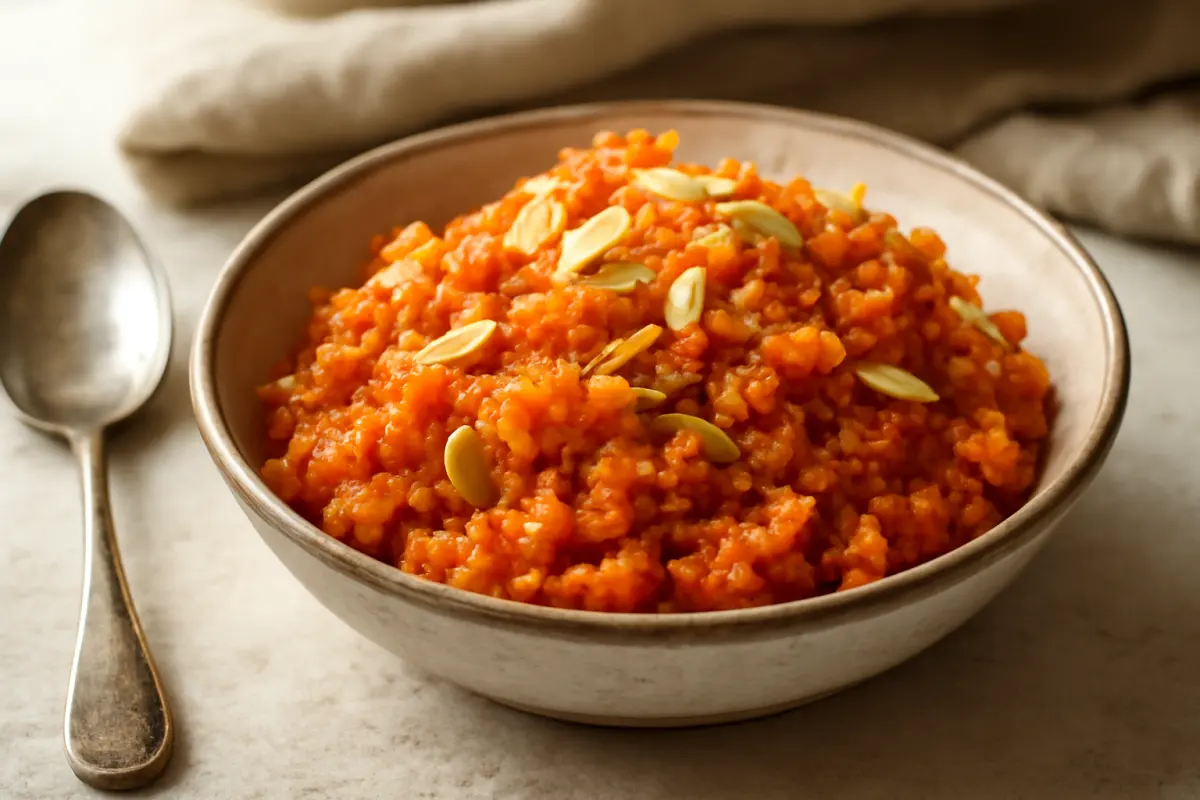
Gajar halwa is a slow-cooked carrot dessert made by reducing grated carrots with milk, sugar, ghee, and cardamom. As the liquid cooks away, the carrots become tender and concentrated, while a little ghee gives the finished halwa a soft, glossy texture.
This version serves six and uses a stovetop method. For the best texture, grate the carrots on the large holes of a box grater and cook them in a wide, heavy-based pan so the milk can reduce evenly.
Ingredients
- 1 kg red or orange carrots, peeled and grated on the large holes of a box grater
- 1 litre whole milk
- 150 g granulated sugar, or 120 g for a less-sweet halwa
- 4 tablespoons ghee, divided
- 6 green cardamom pods, seeds removed and finely crushed, or 1 teaspoon ground cardamom
- 2 tablespoons chopped raw cashews
- 2 tablespoons sliced or slivered almonds
- 2 tablespoons raisins
- 100 g khoya or mawa, crumbled, optional
- 1 small pinch of salt
How to make it
Prepare the carrots and pan. Peel and grate the carrots just before cooking. If they are particularly watery, squeeze them gently once, but do not press them completely dry. Place a wide, heavy-based saucepan or Dutch oven over medium heat and add 2 tablespoons of the ghee.
Cook the carrots briefly. Add the grated carrots and the pinch of salt. Stir to coat them in the ghee, then cook for 8–10 minutes, stirring often. The carrots should soften slightly and lose their raw, grassy smell, but they should not brown. If the bottom starts catching, reduce the heat.
Add the milk. Pour in the milk and bring it to a gentle boil, stirring as it heats. Once bubbling, reduce the heat to medium-low. Leave the pan uncovered and cook for 35–50 minutes, stirring every 5–7 minutes and scraping the bottom and sides. The carrots are ready for the next stage when they are very tender and the milk has reduced to a thick coating rather than a loose liquid.
Add the sugar and cardamom. Stir in the sugar and crushed cardamom. The sugar will draw more moisture from the carrots, so the mixture will become looser again. Cook uncovered for 15–25 minutes, stirring more frequently as it thickens. Keep the heat at medium-low; high heat can scorch the milk solids before the excess liquid has evaporated.
Finish with ghee. When the halwa is thick enough to briefly hold a track when you drag the spoon through it, add the remaining 2 tablespoons of ghee. Stir and cook for another 5–8 minutes. The finished halwa should look moist and glossy, with no pool of milk or ghee around the edges. It should mound softly on a spoon but still be tender rather than dry or crumbly.
Add khoya, if using. Stir in the crumbled khoya during the final 3–4 minutes of cooking. Cook until it melts into the halwa and the mixture looks smooth. If the khoya is very dry, break up any lumps with the back of the spoon as it warms.
Toast the nuts and raisins. While the halwa finishes, heat a small frying pan over low-medium heat. Add 1 teaspoon of the ghee from the measured amount only if the pan is dry; otherwise use the ghee already coating the pan. Fry the cashews and almonds for 1–2 minutes, until lightly golden. Add the raisins and cook for 20–30 seconds, until they plump. Stir them into the halwa, reserving a few for the top if you like.
Rest and serve. Turn off the heat and let the halwa stand for 5 minutes. Taste carefully and add a little more sugar only if needed. Serve warm, or cool it completely before refrigerating. Garnish with the reserved nuts.
Expert tips
- Use a wide pan: More surface area helps the milk evaporate steadily and reduces the cooking time compared with a narrow pot.
- Choose the right carrots: Young, naturally sweet carrots need less sugar. Very mature carrots may be less juicy and can take longer to soften.
- Do not rush the reduction: If the halwa is still soupy after the sugar is added, keep cooking uncovered over medium-low heat. Stir more often as it thickens.
- Prevent scorching: A heavy pan, moderate heat, and regular scraping are more reliable than turning up the flame. If milk has stuck and browned on the bottom, transfer the unstuck halwa to a clean pan without scraping in the burnt layer.
- For a richer finish: Khoya adds a dense, milky texture, but it is optional. Without it, the halwa will be lighter and the carrot flavor more pronounced.
- For softer halwa: Grate the carrots finely or cook them a little longer before adding the sugar. Coarsely grated carrots give the finished dessert more texture.
Serving and storage
Serve gajar halwa warm in small bowls, either plain or topped with toasted nuts. It can also be served chilled; the texture becomes firmer as it cools. For a dessert spread, serve it alongside another milk-based sweet such as sheer khurma, keeping the portions modest because both desserts are rich.
Cool leftovers promptly and transfer them to a covered container. Refrigerate for up to 4 days. Reheat individual portions in a saucepan over low heat or in short microwave intervals, stirring between intervals. Add 1–2 teaspoons of milk while reheating if the halwa has become too firm. Do not leave the finished halwa at room temperature for more than 2 hours, or 1 hour in very hot conditions. The halwa can also be frozen in airtight portions for up to 1 month; thaw it in the refrigerator and reheat gently.
Frequently asked questions
Can I make gajar halwa without khoya?
Yes. Khoya is optional and mainly adds richness and a denser milk flavor. The carrots, milk, sugar, ghee, and cardamom still make a complete halwa without it.
Why is my gajar halwa watery?
It needs more uncovered cooking time. Keep it over medium-low heat and stir regularly until the milk has evaporated and the halwa briefly holds a track when stirred. Remember that the mixture loosens temporarily when sugar is added.
Can I use condensed milk instead of sugar?
You can, but it changes both the sweetness and texture. Start with about 200 g sweetened condensed milk and reduce the sugar substantially or omit it. Add the condensed milk after the carrots and milk have reduced, then cook until thick.
How do I stop gajar halwa from burning?
Use a heavy-based pan, avoid high heat, and scrape the bottom every few minutes. As the halwa thickens, stir continuously or transfer it to a clean pan if milk solids begin sticking.
Can I prepare gajar halwa in advance?
Yes. Cook it completely, cool it promptly, cover it, and refrigerate it for up to 4 days. Reheat gently with a splash of milk if necessary.