Recipes
Japanese Chicken Katsu Recipe
This Japanese chicken katsu recipe makes juicy, tender chicken cutlets with a crisp panko coating and a savory-sweet dipping sauce. Follow the frying cues for an even golden crust without greasy breading.
Overview
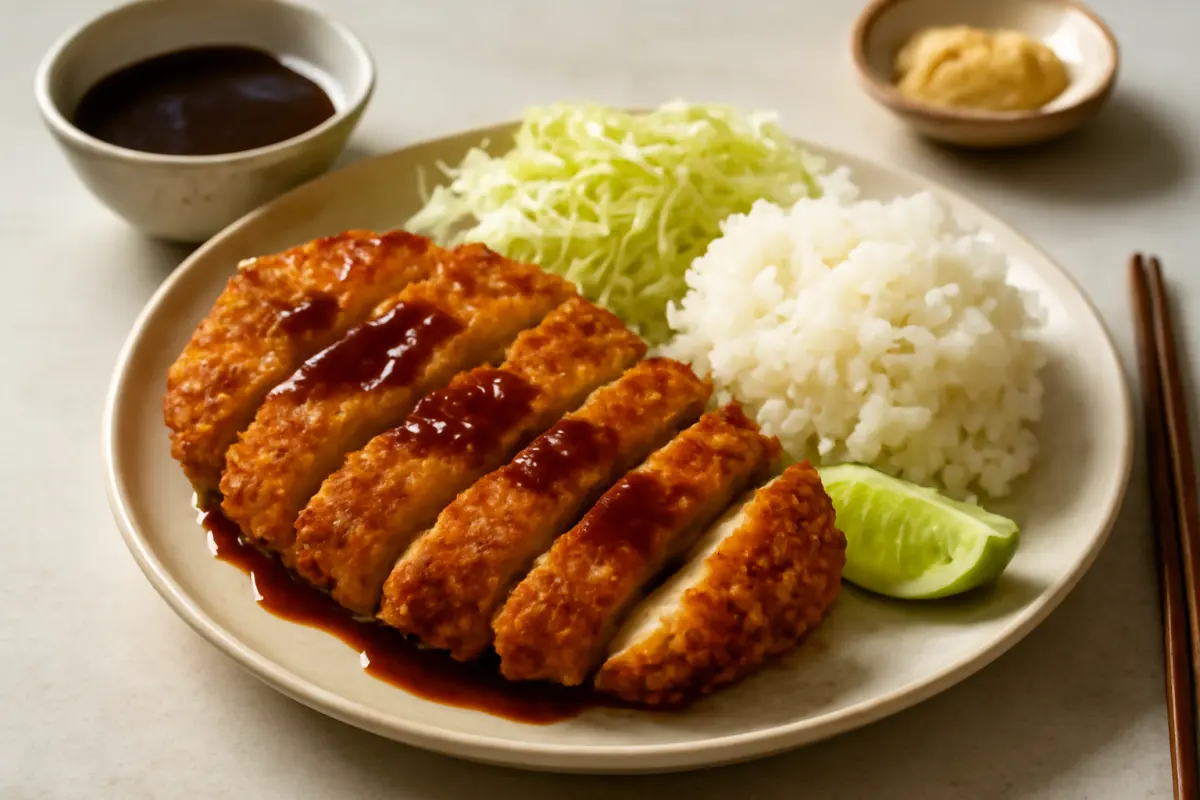
Japanese chicken katsu is made by coating thin chicken cutlets in flour, beaten egg, and coarse panko breadcrumbs, then frying them until deeply golden and crisp. The thin cutlets cook quickly while staying tender, and the crunchy coating gives each slice plenty of texture.
Serve the katsu with shredded cabbage, steamed rice, lemon wedges, and katsu sauce. The recipe makes four cutlets and includes a quick homemade sauce using pantry staples.
Ingredients
- 4 boneless, skinless chicken breasts, about 6 ounces (170 g) each
- 1 teaspoon kosher salt, divided
- 1/2 teaspoon freshly ground black pepper
- 1/2 cup (65 g) all-purpose flour
- 2 large eggs
- 1 tablespoon water
- 1 1/2 cups (90 g) panko breadcrumbs
- 1/2 cup (120 ml) neutral frying oil, such as canola, vegetable, or rice bran oil, plus more if needed
- 2 cups finely shredded green cabbage, for serving
- 4 lemon wedges, for serving
- Cooked white rice, for serving
Quick katsu sauce
- 1/4 cup (60 g) ketchup
- 2 tablespoons Worcestershire sauce
- 1 tablespoon soy sauce
- 2 teaspoons finely grated apple or unsweetened applesauce
- 1 teaspoon granulated sugar
How to make it
Flatten the chicken. Place each chicken breast between two sheets of plastic wrap or parchment. Pound the thickest parts with a meat mallet or small heavy skillet until each piece is an even 1/2-inch (1.25 cm) thickness. Trim any very thin edges so they do not overcook. Pat the chicken dry, then season both sides with the salt and pepper.
Set up the coating station. Put the flour in a shallow dish. Whisk the eggs with the water in a second dish until smooth. Place the panko in a third dish. Keep a clean tray nearby for the coated chicken.
Coat the cutlets. Dredge one cutlet in flour, turning it to cover both sides. Shake off the excess; a thin, even dusting is all you need. Dip it into the egg, letting the excess drip back into the dish, then press it firmly into the panko. Turn and press again until no wet patches remain. Repeat with the other cutlets.
Mix the sauce. Stir the ketchup, Worcestershire sauce, soy sauce, grated apple or applesauce, and sugar together in a small bowl. Taste and add a little more soy sauce for saltiness or ketchup for sweetness if needed. Set aside while you fry the chicken.
Heat the oil. Pour the oil into a large, heavy skillet to a depth of about 1/4 inch (6 mm). Heat over medium-high heat until it reaches 350°F (175°C). If you do not have a thermometer, drop in a few panko crumbs; they should sizzle immediately and rise gently, but the oil should not smoke.
Fry the first side. Carefully lower two cutlets into the hot oil, leaving space between them. Fry for 3 to 4 minutes, adjusting the heat so the coating bubbles steadily without darkening too quickly. The underside should be an even golden brown and feel firm when lightly pressed.
Turn and finish cooking. Turn the cutlets with tongs and fry the second side for 2 to 3 minutes. Transfer them to a wire rack set over a sheet pan. The chicken is done when the thickest part reaches 165°F (74°C) on an instant-read thermometer. If the coating is brown but the center is not done, lower the heat and cook for another minute per side rather than increasing the temperature.
Fry the remaining cutlets. Let the oil return to about 350°F (175°C) before adding the next batch. Skim out loose dark crumbs between batches so they do not burn and stick to the fresh coating. Add more oil if the level has dropped below 1/4 inch.
Slice and serve. Rest the fried cutlets on the rack for 2 minutes, then slice them into strips with a sharp knife. Serve immediately with shredded cabbage, rice, lemon wedges, and the katsu sauce. For another simple side, pair the chicken with lemon herb couscous.
Expert tips
- Use panko, not fine breadcrumbs. Coarse panko creates the light, jagged crust associated with katsu. If your panko is unusually large, crush a few handfuls lightly so it adheres more evenly.
- Do not skip drying the chicken. Moisture on the surface can make the flour clump and cause patches of coating to separate during frying.
- Press the panko on gently but thoroughly. Firm pressure helps the crumbs adhere; compacting them too heavily can make the crust dense.
- Avoid crowding the skillet. Frying too many cutlets at once lowers the oil temperature and can leave the coating pale or greasy. Two cutlets per batch is usually manageable in a large skillet.
- No meat mallet? Use the flat side of a small skillet or rolling pin. Cover the chicken first and pound from the center toward the edges.
- For an air-fryer version, lightly spray the coated cutlets with oil and cook at 400°F (200°C) for about 10 to 14 minutes, turning halfway, until the coating is browned and the chicken reaches 165°F (74°C). Timing varies with thickness and appliance.
Serving and storage
Serve chicken katsu as soon as possible so the crust stays crisp. Keep the sauce on the side rather than pouring it over the cutlet until you are ready to eat. Shredded cabbage, rice, lemon, or steamed vegetables all work well alongside it.
Refrigerate leftover chicken in a shallow airtight container within 2 hours of cooking and use it within 3 to 4 days. For the best texture, reheat it on a wire rack in a 400°F (200°C) oven or air fryer until hot throughout and crisp again. Avoid stacking hot cutlets tightly, which traps steam and softens the coating. Freeze cooked, cooled cutlets in a single layer, then transfer them to a freezer-safe container for up to 2 months; reheat from thawed or frozen until the center reaches 165°F (74°C).
Frequently asked questions
Can I use chicken thighs for chicken katsu?
Yes. Boneless, skinless chicken thighs work well and stay juicy, but trim thick areas and pound them to an even 1/2-inch thickness so they cook at the same rate as the coating.
Why did my katsu coating fall off?
The chicken may have been wet, or the flour and egg layers may have been too thick. Pat the chicken dry, shake off excess flour, let excess egg drip away, and press the panko onto every surface before frying.
How do I keep chicken katsu crisp after frying?
Place the cooked cutlets on a wire rack instead of paper towels or a flat plate. A rack lets steam escape from the underside. Keep the sauce separate until serving.
Can I prepare chicken katsu ahead of time?
You can pound and coat the chicken several hours ahead. Arrange the cutlets in a single layer, cover loosely, and refrigerate. Let them sit out for about 10 minutes while the oil heats, then fry as directed.
What can I use instead of panko?
Crushed cornflakes or coarse fresh breadcrumbs can provide a crisp coating, though the texture will differ. Fine dry breadcrumbs work in a pinch but make a less airy crust.