Recipes
Masoor Dal Recipe
This masoor dal recipe makes a comforting, weeknight-friendly red lentil dal with a silky texture, lightly spiced tomato base, and sizzling garlic-cumin tempering.
Overview
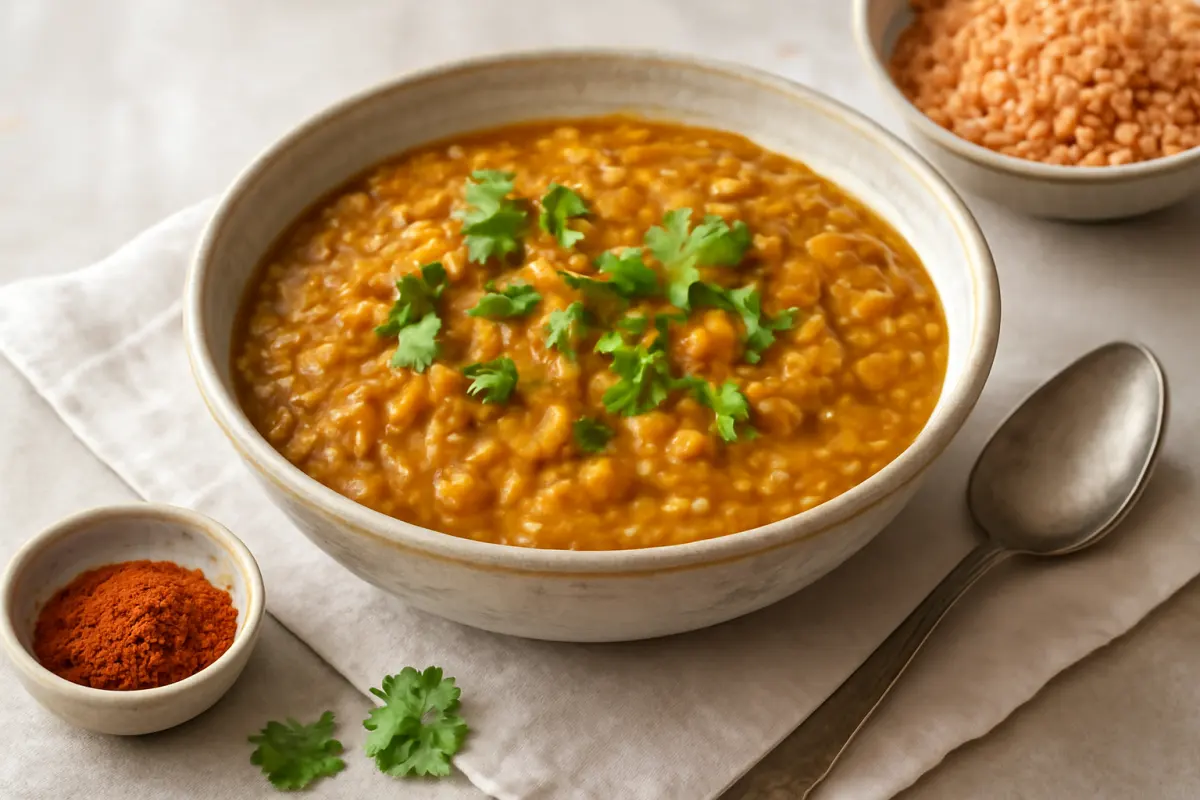
This masoor dal recipe uses split red lentils, which cook quickly and soften into a naturally creamy dal without soaking. The lentils simmer with onion, tomato, turmeric, and green chili, then get finished with a hot cumin-garlic tempering.
Serve it with rice, roti, or puri. The finished dal should be thick enough to coat a spoon but loose enough to pour; add a little hot water at the end if it tightens as it stands.
Ingredients
- 1 cup (200 g) split red lentils, also called masoor dal
- 3 cups (720 ml) water, plus more as needed
- 1 medium yellow onion, finely chopped, about 150 g
- 2 medium tomatoes, finely chopped, about 250 g
- 1 green chili, slit lengthwise, optional
- 3 garlic cloves, finely chopped
- 1 teaspoon grated fresh ginger
- 1/2 teaspoon ground turmeric
- 1 teaspoon kosher salt, plus more to taste
- 2 tablespoons neutral oil or ghee, divided
- 1 teaspoon cumin seeds
- 1/2 teaspoon Kashmiri chili powder or mild paprika
- 1 dried red chili, broken in half, optional
- 2 tablespoons chopped fresh cilantro
- 1 tablespoon lemon juice, optional
How to make it
Put the lentils in a fine-mesh sieve and rinse under cool running water until the water runs mostly clear. Pick out any small stones or discolored lentils. Drain well; soaking is not necessary for split red lentils.
Heat 1 tablespoon of the oil or ghee in a medium saucepan over medium heat. Add the chopped onion and cook for 5–7 minutes, stirring occasionally, until soft and lightly golden at the edges.
Add the chopped tomato, ginger, green chili, and turmeric. Cook for 4–6 minutes, stirring often, until the tomatoes collapse and the mixture looks thick and glossy rather than watery. If it starts sticking, add 1 tablespoon of water and lower the heat slightly.
Stir in the rinsed lentils, 3 cups of water, and the salt. Bring the pot to a boil, then reduce the heat to low. Leave the lid slightly ajar and simmer for 20–25 minutes, stirring every few minutes so the lentils do not settle and catch on the bottom.
Check the texture. The lentils are done when they have lost their shape and mash easily against the side of the pot with the back of a spoon. For a smoother dal, whisk it for 30–60 seconds. For a more textured dal, stir gently and leave some soft lentils intact. Add 1/4 cup hot water at a time if it is thicker than you like.
Make the tempering in a small skillet. Heat the remaining 1 tablespoon oil or ghee over medium heat. Add the cumin seeds and cook for about 20 seconds, until they sizzle and smell nutty. Add the chopped garlic and dried red chili, if using. Cook for 30–45 seconds, until the garlic is pale golden. Do not let it turn dark brown, as it can taste bitter.
Remove the skillet from the heat and stir in the chili powder or paprika. Immediately pour the tempering over the dal; the oil should spread across the surface and the garlic should continue sizzling briefly. Stir once or twice, then taste and adjust the salt.
Finish with the cilantro and lemon juice, if using. Rest the dal for 5 minutes before serving. Taste again after resting and loosen it with a splash of hot water if needed.
Expert tips
- For a thinner dal: Add hot water in small amounts after cooking. Cold water can interrupt the simmer and make it harder to judge the final consistency.
- For a thicker dal: Simmer uncovered for 3–5 extra minutes, stirring frequently, until it mounds slightly on a spoon.
- If the lentils are still firm: Keep simmering with the lid slightly ajar and add water if the pot looks dry. Older lentils can take a few extra minutes.
- If the dal tastes flat: Check salt first, then add the optional lemon juice a little at a time. Acid should brighten the flavor, not make the dal sour.
- If the bottom starts catching: Move the dal to a clean saucepan without scraping the stuck layer, then continue cooking over low heat.
- Oil or ghee substitution: Use any neutral cooking oil for the tempering. Ghee gives a richer flavor, while oil keeps the dish dairy-free.
- Spice adjustment: Omit the green and dried chilies for a mild dal, or add extra chili powder only after tasting so the heat stays balanced.
Serving and storage
Serve the dal hot with steamed basmati rice or soft roti. It also works as part of an Indian-style meal with vegetables, pickles, or puri. For dessert, rice kheer makes a fitting menu pairing.
Cool leftovers promptly and refrigerate them in a covered container for up to 4 days. The dal will thicken as it chills. Reheat it in a saucepan over medium-low heat, stirring often, with a splash of water until it is steaming hot throughout. Reheat only the portion you plan to eat, and discard leftovers that have been left at room temperature for more than 2 hours.
Frequently asked questions
Do I need to soak masoor dal before cooking?
No. Split red lentils cook quickly and usually need only a thorough rinse. Soaking is optional but does not provide much benefit for this recipe.
Why is my masoor dal watery?
Simmer it uncovered for a few extra minutes, stirring regularly, until some of the liquid evaporates. It will also thicken slightly as it rests.
Can I make masoor dal without a tempering?
Yes. The dal will still be flavorful from the onion, tomato, ginger, and spices, but the cumin-garlic tempering adds a fresh, fragrant finish. Stir a little oil or ghee directly into the finished pot if you want a simpler alternative.
Can I use brown or green lentils instead of red lentils?
You can, but they need a longer cooking time and stay more intact. Add extra water as needed and cook until tender; the finished dish will be less smooth than dal made with split red lentils.
How can I make this masoor dal vegan?
Use neutral oil instead of ghee. The remaining ingredients are plant-based as written.