Recipes
One-Pot Chicken Cacciatore Recipe
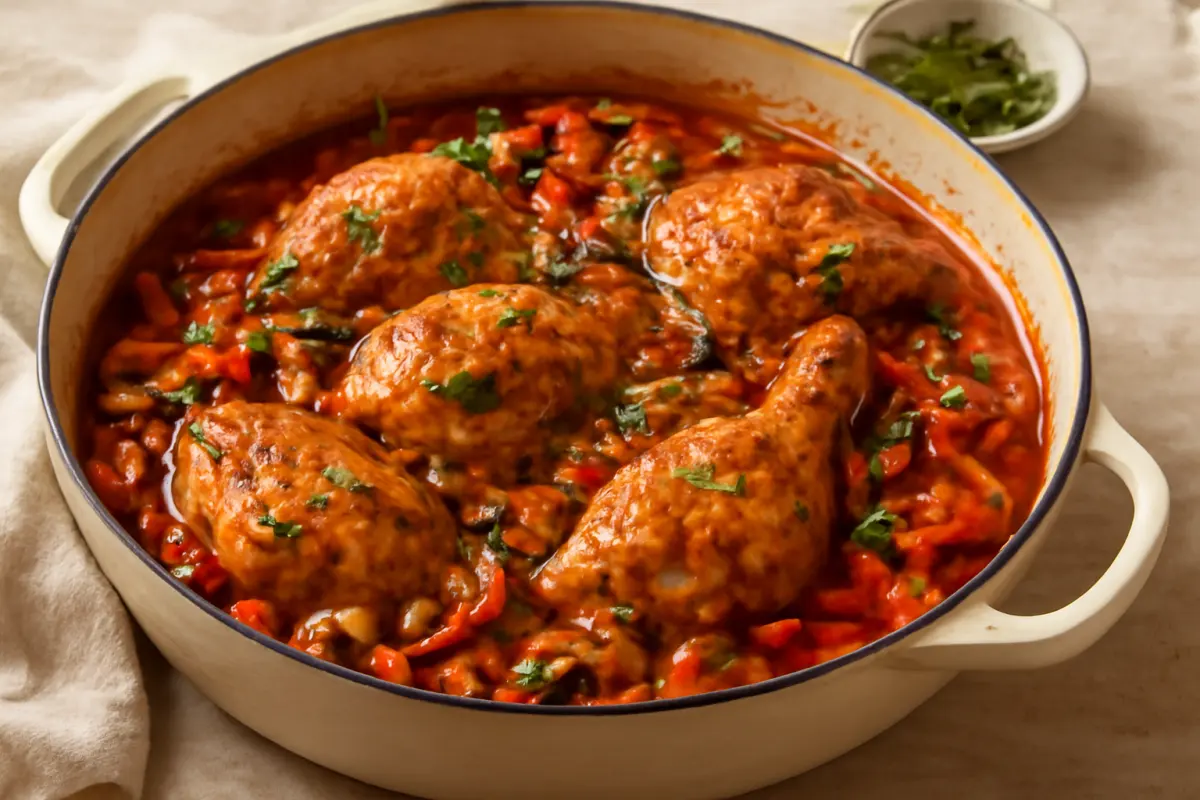
This one-pot chicken cacciatore combines golden bone-in chicken thighs with peppers, mushrooms, tomatoes, garlic, and Italian herbs. It simmers in one Dutch oven until the chicken is tender and the sauce is rich enough to spoon over pasta, polenta, or crusty bread.
Overview
This one-pot chicken cacciatore recipe starts with bone-in, skin-on chicken thighs browned until deeply golden. The same pot then builds a savory sauce with onion, bell pepper, mushrooms, garlic, crushed tomatoes, herbs, and a little red wine.
The chicken finishes gently in the oven, where it becomes tender while the sauce thickens around it. Serve it over pasta, creamy polenta, rice, or with crusty bread for soaking up the tomato sauce.
Ingredients
- 6 bone-in, skin-on chicken thighs, about 2 1/2 to 3 pounds total
- 1 1/2 teaspoons kosher salt, divided, plus more to taste
- 1/2 teaspoon freshly ground black pepper, divided
- 2 tablespoons olive oil
- 1 medium yellow onion, diced
- 1 medium red bell pepper, sliced into 1/2-inch strips
- 8 ounces cremini or white mushrooms, sliced
- 4 garlic cloves, finely chopped
- 1 tablespoon tomato paste
- 1/2 cup dry red wine
- 1 can (28 ounces) crushed tomatoes
- 1 teaspoon dried oregano
- 1/2 teaspoon dried thyme
- 1/4 teaspoon red pepper flakes, optional
- 1 bay leaf
- 1/2 cup pitted green or Kalamata olives, optional
- 2 tablespoons chopped fresh parsley, for serving
How to make it
Heat the oven and season the chicken. Position a rack in the middle of the oven and heat it to 375°F. Pat the chicken thighs very dry with paper towels. Season both sides with 1 teaspoon of the salt and 1/4 teaspoon of the black pepper. Dry skin browns more effectively and is less likely to stick to the pan.
Brown the chicken. Heat the olive oil in a large oven-safe Dutch oven or deep, heavy skillet over medium-high heat. Arrange the chicken skin-side down without crowding it. Cook for 6 to 8 minutes, until the skin is a deep golden brown and releases easily from the pan. Turn the thighs and cook for 2 minutes more. Transfer the chicken to a plate; it will not be fully cooked yet.
Cook the vegetables. Reduce the heat to medium. Add the onion and bell pepper to the rendered fat and cook for 4 minutes, stirring occasionally, until the onion starts to soften. Add the mushrooms and cook for 5 to 7 minutes, until they release their moisture and the pan looks mostly dry. If the bottom begins to darken too quickly, lower the heat slightly.
Build the sauce base. Stir in the garlic and tomato paste. Cook for 1 minute, stirring constantly, until the garlic smells fragrant and the tomato paste turns a deeper brick red. Pour in the red wine and scrape the browned bits from the bottom of the pot. Simmer for 2 to 3 minutes, until the wine has reduced by roughly half.
Add the tomatoes and herbs. Stir in the crushed tomatoes, oregano, thyme, red pepper flakes if using, bay leaf, remaining 1/2 teaspoon salt, and remaining 1/4 teaspoon black pepper. Bring the sauce to a gentle simmer. Taste carefully and add a little more salt if needed. Stir in the olives, if using.
Return the chicken to the pot. Nestle the thighs skin-side up into the sauce. The sauce should come about halfway up the chicken, leaving the browned skin exposed. Any juices on the plate can be poured into the pot. Bring the sauce back to a gentle simmer, then cover the pot.
Bake until tender. Transfer the covered pot to the oven and bake for 30 minutes. Remove the lid and bake for 15 to 20 minutes more, until the sauce is visibly bubbling and slightly thickened. The chicken is ready when a thermometer inserted into the thickest part, away from the bone, reads at least 165°F; thighs are often more tender around 175°F to 185°F. The meat should feel tender when pierced and should pull away from the bone easily.
Rest and finish. Remove the bay leaf. Let the chicken rest in the sauce for 5 minutes. Sprinkle with parsley and spoon the sauce over the chicken just before serving.
Expert tips
- For crispier skin: Keep the thighs skin-side up and uncovered for the entire final 15 to 20 minutes. The sauce will not crisp skin that is submerged.
- If the sauce is thin: Transfer the chicken to a plate and simmer the sauce uncovered on the stovetop for 5 to 10 minutes, until it coats the back of a spoon.
- If the sauce tastes sharp: Simmer it for a few extra minutes rather than adding sugar. A small knob of butter stirred in at the end can also soften the edges.
- Wine substitution: Replace the red wine with 1/2 cup low-sodium chicken broth. Add 1 teaspoon red wine vinegar at the end only if the finished sauce needs more brightness.
- Using boneless thighs: Substitute 2 pounds boneless, skinless thighs, but begin checking them after about 25 minutes in the oven. They will cook faster and will not produce the same browned skin.
- Avoid watery vegetables: If using frozen peppers or mushrooms, thaw and drain them first. Extra moisture can make the sauce loose and prevent good browning.
Serving and storage
Serve the chicken cacciatore with pasta, polenta, mashed potatoes, rice, or crusty bread. A simple green salad makes a fresh side for the rich tomato sauce.
Cool leftovers promptly, then refrigerate them in a covered container for up to 3 days. Reheat gently in a covered saucepan over medium-low heat, adding a splash of water or broth if the sauce has thickened. Reheat until the chicken and sauce are steaming hot throughout. Freeze cooled chicken and sauce in an airtight container for up to 3 months; thaw overnight in the refrigerator before reheating.
Frequently asked questions
Can I make chicken cacciatore with boneless chicken thighs?
Yes. Use about 2 pounds of boneless, skinless chicken thighs and start checking them after 25 minutes in the oven. They are done when the thickest piece reaches at least 165°F, though they may be less tender than bone-in thighs and will not have crisp skin.
Why is my chicken cacciatore sauce watery?
Vegetables may have released extra moisture, or the sauce may not have simmered long enough. Remove the chicken and simmer the sauce uncovered for 5 to 10 minutes until it thickens. Thaw and drain frozen vegetables before cooking to reduce excess liquid.
Can I make this recipe without red wine?
Yes. Replace the wine with 1/2 cup low-sodium chicken broth. If the finished sauce lacks the slight acidity provided by wine, stir in 1 teaspoon red wine vinegar at the end and taste before adding more.
What should I serve with chicken cacciatore?
Pasta, polenta, mashed potatoes, rice, and crusty bread all work well because they absorb the tomato sauce. A simple green salad can balance the rich main dish.
How do I store leftover chicken cacciatore?
Refrigerate cooled leftovers in a covered container for up to 3 days. Reheat gently until steaming hot throughout. The chicken and sauce can also be frozen in an airtight container for up to 3 months.