Recipes
Potato Samosa Recipe
These potato samosas have a crisp, flaky shell and a warmly spiced potato-and-pea filling. The method covers dough texture, shaping, frying temperature, and practical fixes for soggy or split samosas.
Overview
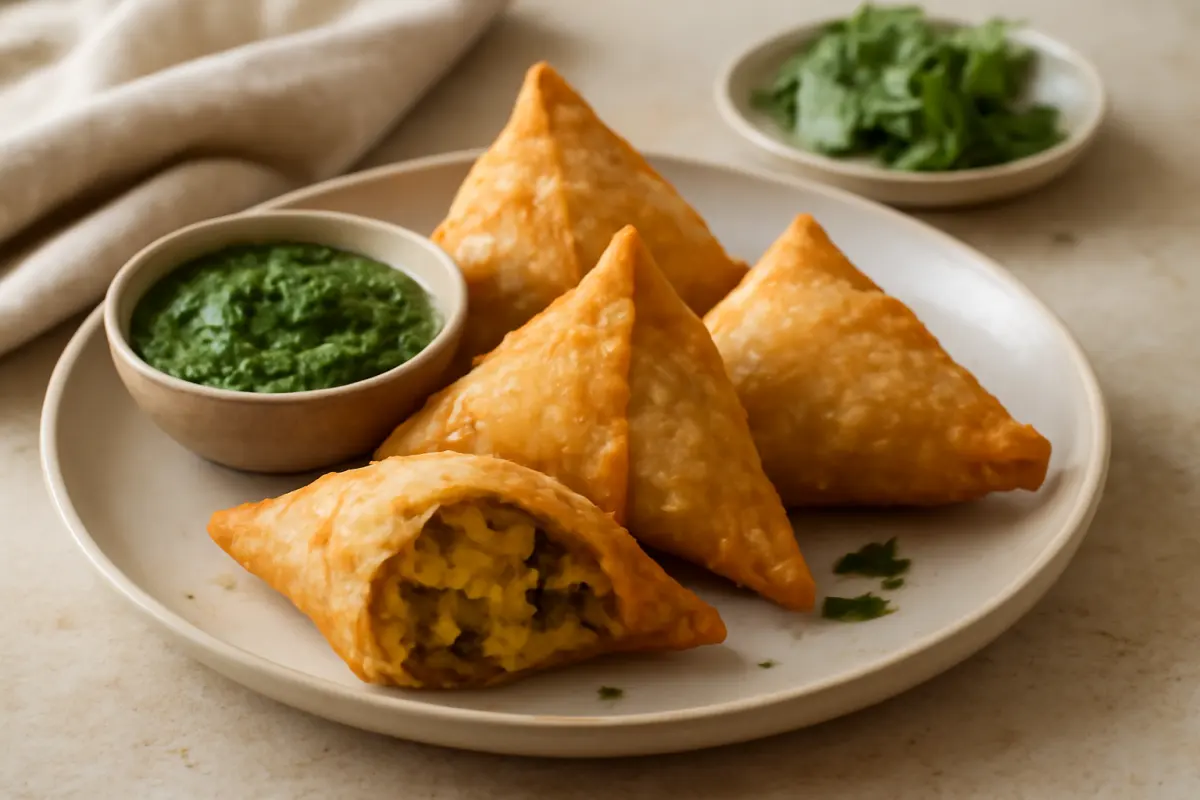
These potato samosas are filled with spiced potatoes, green peas, fresh chile, and coriander, then wrapped in a sturdy pastry and fried until golden. The filling is savory and aromatic rather than wet, which helps the pastry stay crisp.
The dough should feel firm and smooth, not soft like bread dough. Fry the samosas over moderate heat first so the pastry cooks through, then raise the heat briefly at the end for a crisp, deeply golden exterior.
Ingredients
- 300 g plain flour, plus extra for the work surface
- 1 teaspoon fine salt
- 1/2 teaspoon ajwain seeds, or 1/2 teaspoon cumin seeds
- 60 ml neutral oil or melted ghee, plus oil for frying
- 120 ml water, plus up to 1 tablespoon more if needed
- 500 g potatoes, peeled and cut into 3 cm pieces
- 100 g frozen peas
- 2 tablespoons neutral oil
- 1 teaspoon cumin seeds
- 1 teaspoon grated fresh ginger
- 1 green chile, finely chopped; remove the seeds for less heat
- 1 teaspoon ground coriander
- 1/2 teaspoon ground cumin
- 1/2 teaspoon garam masala
- 1/2 teaspoon amchur powder, or 1 tablespoon lemon juice
- 3/4 teaspoon fine salt, or to taste
- 2 tablespoons chopped fresh coriander
- 2 tablespoons plain flour mixed with 3 tablespoons water, for sealing
How to make it
Make the dough. Add the flour, salt, and ajwain to a bowl. Pour in 60 ml oil or melted ghee and rub it through the flour with your fingertips for 2 to 3 minutes. The mixture should look sandy and hold its shape briefly when squeezed. This step helps create a flaky pastry.
Add 120 ml water and mix until a firm dough forms. If dry flour remains, add extra water 1 teaspoon at a time. Knead for 5 minutes, until the dough is smooth but still firm. Cover and rest it for 30 minutes at room temperature.
Cook the potatoes. Put the potatoes in a saucepan, cover with cold water, and add a pinch of salt. Bring to a boil, then simmer for 10 to 12 minutes, until a knife enters the center with slight resistance. Drain well and let them steam-dry for 5 minutes. The potatoes should be tender but not waterlogged.
Make the filling. Cook the peas in boiling water for 2 minutes, then drain. Heat 2 tablespoons oil in a skillet over medium heat. Add the cumin seeds and cook for about 30 seconds, until fragrant. Add the ginger and green chile and cook for 30 seconds more.
Add the cooked potatoes and peas. Sprinkle in the ground coriander, ground cumin, garam masala, amchur, and salt. Stir and lightly crush some of the potatoes with the back of a spoon, leaving plenty of small chunks. Cook for 3 to 4 minutes, until the filling looks dry and no liquid gathers in the pan. Remove from the heat and stir in the fresh coriander. Cool completely before shaping.
Divide and roll the dough. Knead the rested dough briefly, then divide it into 6 equal pieces. Keep the pieces covered while you work. Roll one piece into a circle about 16 cm wide and 2 mm thick. It should be thin enough to fold easily but not so thin that the filling can puncture it.
Cut the circle in half to make two semicircles. Brush the straight edge of one semicircle lightly with the flour-and-water paste. Bring the two corners of the straight edge together to form a cone, overlapping them by about 1 cm. Press the seam firmly so it does not open.
Hold the cone in your hand and add about 2 tablespoons of cooled filling, leaving about 1 cm of pastry clear at the top. Do not pack the filling tightly or overfill it. Press the top edges together, then seal with the flour paste. Pinch or crimp the sealed edge and set the samosa upright on a tray. Repeat with the remaining dough and filling.
Fry the samosas. Pour 5 to 7 cm oil into a heavy saucepan or deep skillet. Heat to 160°C. If you do not have a thermometer, a small piece of dough should sink briefly, then rise slowly with small bubbles; it should not brown immediately.
Carefully lower 4 to 6 samosas into the oil, depending on the size of your pan. Keep the oil at about 155 to 165°C and fry for 10 to 12 minutes, turning occasionally. The samosas should become pale golden and feel firm before the final browning stage. Frying too hot at the beginning can blister the pastry while leaving it undercooked inside.
Raise the oil to about 180°C and fry for 1 to 2 minutes, turning once, until the shells are crisp and golden brown. Transfer to a wire rack or a tray lined with paper towels. Bring the oil back to the starting temperature before frying the next batch.
Serve the samosas warm with tamarind chutney or mint chutney. For a cooling side, cucumber raita also works well.
Expert tips
- Prevent a tough pastry: Measure the flour and oil accurately, and do not add extra water unless the dough truly cannot come together. A soft, wet dough tends to absorb more oil.
- Keep the filling dry: Drain the potatoes and peas thoroughly, then cook the filling until it leaves the sides of the pan clean. Warm or wet filling can soften the pastry and make sealing difficult.
- Stop leaks: Use only a thin layer of sealing paste and press the seam firmly. Too much paste can make the seam gummy; too little leaves gaps.
- Avoid bubbles and blisters: Start frying at moderate heat. Rapid bubbling and early browning usually mean the oil is too hot.
- If the samosas split: They may be overfilled, the seam may not be sealed, or the dough may have dried while shaping. Keep unused dough covered and leave a clear border around the filling.
- For a sharper filling: Use amchur for dry tanginess. If substituting lemon juice, add it after the pan is off the heat and cook briefly so the filling remains dry.
Serving and storage
Serve the samosas warm or at room temperature with chutney. Let fried samosas drain and cool on a wire rack rather than stacking them immediately, which can trap steam and soften the crust.
Refrigerate cooled samosas in a covered container for up to 3 days. Reheat them in a 190°C oven or air fryer until hot and crisp, usually 8 to 12 minutes depending on size. Avoid reheating them in the microwave if you want to preserve the pastry’s crunch.
For longer storage, freeze shaped, uncooked samosas in a single layer until firm, then transfer them to a freezer-safe container for up to 1 month. Fry them from frozen at moderate heat, allowing several extra minutes for the centers to heat through; do not thaw them first.
Frequently asked questions
Can I bake potato samosas instead of frying them?
Yes. Brush the shaped samosas lightly with oil and bake them at 200°C for about 25 to 30 minutes, turning once, until golden and firm. The pastry will be crisp but usually less blistered and flaky than deep-fried samosas.
Why are my samosas oily instead of crisp?
The oil was probably too cool, the dough contained too much water, or the filling was moist. Fry in small batches, maintain about 155 to 165°C during the main cooking stage, and make sure the filling is completely cool and dry before shaping.
Can I use leftover mashed potatoes for the filling?
Yes, provided they are fairly dry and not mixed with milk or butter. Use 500 g mashed potatoes, fold them into the cooked spices with the peas, and cook until the filling is dry enough to hold its shape.
How do I keep samosa pastry from cracking?
Keep the unused dough covered, avoid rolling it paper-thin, and do not overfill the cone. If the dough feels dry around the edges, lightly moisten the edge with water before sealing.
Can I prepare potato samosas ahead of time?
You can shape them several hours ahead and refrigerate them in a single layer, covered, before frying. For longer storage, freeze the uncooked samosas in a single layer, then transfer them to a sealed container.