Recipes
Tamarind Chutney Recipe
This tamarind chutney is glossy, sweet, tangy, and gently spiced. Make it from seedless tamarind and jaggery, then serve it with snacks, chaat, puri, or paratha.
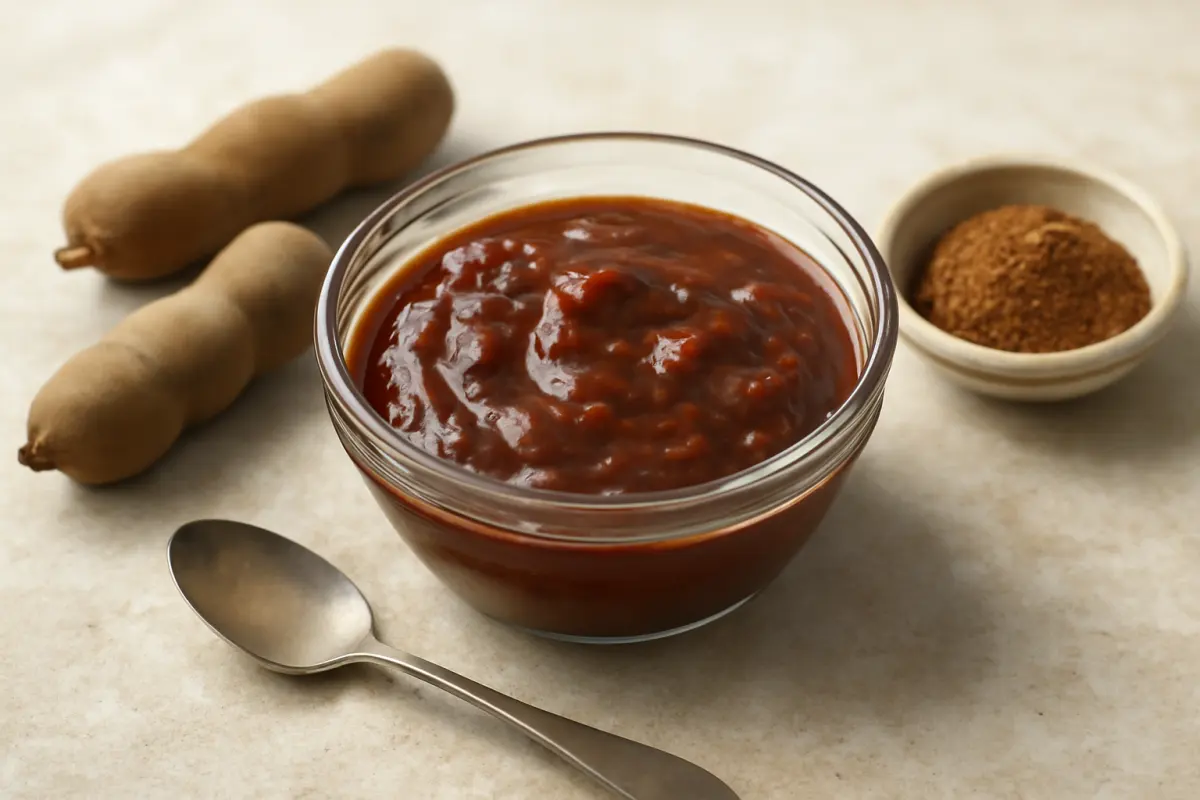
Overview
This tamarind chutney has a smooth, pourable texture and a balanced sweet-sour flavor. Tamarind provides the sharpness, while jaggery rounds it out with a deep caramel-like sweetness. Roasted cumin, fennel, chili, and black salt give the sauce its characteristic savory warmth.
The recipe makes about 475 ml, enough for several chaat servings or a jar to keep in the refrigerator. Straining the cooked tamarind is worthwhile: it removes fibers and seeds and leaves a sauce that drizzles cleanly over food.
Ingredients
- 120 g seedless tamarind pulp or seedless dried tamarind
- 360 ml just-boiled water, plus 60 ml more if needed
- 150 g grated or finely chopped jaggery
- 1 teaspoon roasted ground cumin
- 1 teaspoon ground coriander
- 1/2 teaspoon fennel seeds, lightly crushed
- 1/2 teaspoon Kashmiri chili powder or mild chili powder
- 1 teaspoon black salt
- 1/2 teaspoon fine salt, or to taste
How to make it
Soak the tamarind. Put the tamarind in a heatproof bowl and pour over 360 ml just-boiled water. Leave it for 20 minutes, until the pulp is soft enough to break apart with a spoon.
Extract the pulp. Mash and squeeze the softened tamarind in the soaking water until the liquid turns dark and thick. Pour it through a fine-mesh strainer set over a saucepan. Press the pulp firmly with the back of a spoon to extract as much liquid as possible, then discard the fibrous solids and any seeds.
Add the sweetener and spices. Stir the jaggery, roasted cumin, coriander, fennel, chili powder, black salt, and fine salt into the strained tamarind liquid. If the mixture looks unusually thick before cooking, add up to 60 ml water.
Simmer gently. Bring the mixture to a boil over medium heat, stirring until the jaggery dissolves. Reduce the heat to low and simmer uncovered for 15–20 minutes. Stir every few minutes so the jaggery does not catch on the bottom.
Check the consistency. The chutney is ready when it looks glossy and coats the back of a spoon. Draw a finger through the coating; the line should remain visible for a moment. It will thicken further as it cools, so do not reduce it until it looks as thick as cold chutney.
Cool and adjust. Remove the pan from the heat and let the chutney cool for 15 minutes. Taste it while warm. Add a little water if it is too thick, or simmer for another 2–3 minutes if it is too loose. For a smoother finish, strain it once more while warm.
Serve. Use the chutney warm, at room temperature, or chilled. Drizzle it over chaat, samosas, or puri, or serve it alongside aloo paratha and other savory snacks.
Expert tips
- Using tamarind concentrate: Replace the dried tamarind and soaking water with 120 g unsweetened tamarind concentrate and 300 ml water. Start with 120 g jaggery, then adjust after simmering because concentrates vary in sharpness.
- No jaggery: Use 135 g dark brown sugar. The chutney will be slightly less earthy but will still have the right sweet-tangy balance.
- Too sour: Add jaggery 1 tablespoon at a time and simmer for 2 minutes after each addition. Avoid adding a large amount at once.
- Too sweet: Stir in 1–2 teaspoons tamarind concentrate or a small amount of lemon juice after cooling. Add gradually so the chutney does not become harsh.
- Too thick: Whisk in hot water 1 tablespoon at a time. If you add a substantial amount, bring the chutney back to a brief simmer before cooling it again.
- Too thin: Simmer uncovered for a few more minutes. Remember that the final texture is easier to judge once the chutney has cooled.
- For a smoother chutney: Strain after soaking and again after cooking. A fine-mesh strainer works better than a coarse colander for removing fibers.
- For more heat: Add 1/4 teaspoon cayenne or a pinch of hot chili powder with the other spices. Keep the chili moderate if the chutney will be served over strongly spiced chaat.
Serving and storage
Serve the chutney with samosas, pakoras, chaat, dahi-based snacks, or mint chutney as a contrasting dip. It is also good drizzled over gobi paratha or spooned onto a savory snack platter.
Cool the chutney promptly, transfer it to a clean airtight jar, and refrigerate it within 2 hours of cooking. Use a clean spoon each time and use the chutney within 1 week. If it develops mold, an off smell, or fermentation bubbles, discard it rather than tasting it. For longer storage, freeze it in small portions for up to 3 months; thaw it in the refrigerator and stir before serving.
Frequently asked questions
Can I make tamarind chutney without soaking dried tamarind?
Yes. Simmer the tamarind with the water for 5–7 minutes until soft, then cool it enough to handle, mash it thoroughly, and strain it. Soaking in boiled water usually extracts the pulp with less effort.
Why is my tamarind chutney bitter?
The spices may have been overheated, the tamarind may include burnt or old pieces, or the chutney may have reduced too far. Add a little water and jaggery, then simmer briefly. Straining the pulp carefully can also remove woody or bitter fragments.
How thick should tamarind chutney be?
It should coat the back of a spoon but still pour slowly. Chutney that looks very thick in the pan will likely become too firm when cold, so adjust it with hot water before storing.
Can I use tamarind paste instead of dried tamarind?
Yes. Use about 120 g unsweetened tamarind concentrate with 300 ml water, then add the jaggery gradually. Concentrates differ in strength, so taste after simmering before adding more sweetener.