Recipes
Vegetable Pad Thai Recipe
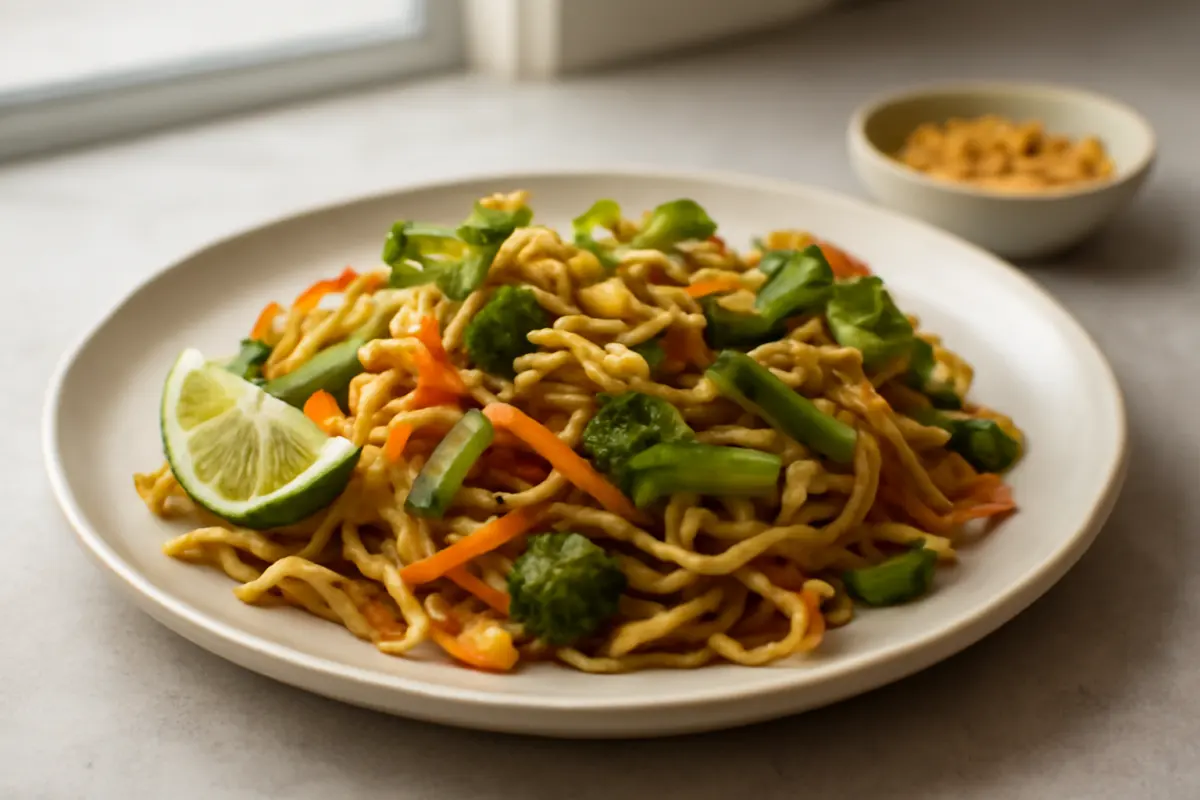
This vegetable pad Thai combines chewy rice noodles, golden tofu, crisp vegetables, and a sweet-sour tamarind sauce for a satisfying meat-free dinner. Prepare everything before cooking because the noodles come together quickly in one hot pan.
Overview
This vegetable pad Thai has chewy rice noodles, golden tofu, crisp vegetables, and a balanced sauce made with tamarind, soy sauce, lime, and brown sugar. The tofu adds substance while bean sprouts, carrots, and bell pepper keep the stir-fry fresh and crunchy.
The most important preparation step is soaking the noodles until they are flexible but still firm in the center. They finish cooking in the pan with the sauce, so fully soft noodles can turn mushy. Have every ingredient measured and close to the stove before you begin.
Ingredients
- 8 ounces dried flat rice noodles, about ¼ inch wide
- 14 ounces firm or extra-firm tofu, drained and pressed for 15 minutes
- 2 tablespoons neutral oil, such as canola or grapeseed, divided
- 2 large eggs, lightly beaten
- 3 cloves garlic, finely chopped
- 1 small shallot, thinly sliced
- 1 medium carrot, cut into thin matchsticks
- 1 red bell pepper, thinly sliced
- 2 cups fresh bean sprouts, divided
- 3 green onions, sliced, with the white and green parts separated
- ¼ cup chopped roasted peanuts, plus more for serving
- ¼ cup chopped fresh cilantro, optional
- Lime wedges, for serving
For the sauce
- 3 tablespoons tamarind concentrate
- 3 tablespoons light brown sugar, packed
- 3 tablespoons soy sauce or tamari
- 2 tablespoons fresh lime juice
- 2 tablespoons water
- ½ to 1 teaspoon crushed red pepper flakes, to taste
How to make it
Soak the noodles. Put the rice noodles in a large bowl and cover them with warm water. Soak according to the package directions, usually 20 to 30 minutes, until the strands bend easily but still feel slightly firm when bitten. Drain thoroughly. If your noodles soften quickly, check them after 15 minutes so they do not become limp.
Make the sauce. Stir the tamarind concentrate, brown sugar, soy sauce, lime juice, water, and red pepper flakes in a small bowl. Taste a drop and adjust if needed: add a little more sugar for sharp tamarind, lime for brightness, or water if the mixture is unusually thick. Tamarind products vary in strength, so the sauce should taste distinctly sweet-sour and savory before it reaches the noodles.
Prepare the tofu. Cut the pressed tofu into ½-inch cubes and pat them dry. Heat 1 tablespoon of the oil in a large wok or 12-inch skillet over medium-high heat. Add the tofu in one layer and cook for 6 to 8 minutes, turning occasionally, until several sides are golden and the cubes feel lightly crisp. Transfer the tofu to a plate.
Cook the eggs. Add the remaining 1 tablespoon oil to the pan. Pour in the beaten eggs and stir for 30 to 45 seconds, just until softly scrambled and no longer wet. Move the eggs to the same plate as the tofu.
Stir-fry the aromatics and vegetables. Add the garlic, shallot, and the white parts of the green onions to the hot pan. Stir for about 30 seconds, until fragrant but not browned. Add the carrot and bell pepper and stir-fry for 2 minutes. They should brighten in color and begin to soften while retaining some snap.
Add the noodles and sauce. Add the drained noodles and pour the sauce around the edge of the pan. Toss continuously with tongs for 2 to 3 minutes. If the noodles stick or still seem firm, add 1 tablespoon of water at a time and keep tossing. The noodles are ready when they are pliable and glossy, with no hard center, but still have a slight chew.
Finish the stir-fry. Return the tofu and eggs to the pan. Add 1 cup of the bean sprouts and the green parts of the green onions. Toss for 1 minute, just until everything is hot and the sprouts are slightly softened. Do not overcook; the remaining sprouts will provide freshness at the table.
Serve immediately. Divide the pad Thai among four bowls. Top with the remaining bean sprouts, chopped peanuts, and cilantro if using. Serve with lime wedges and extra red pepper flakes. For a version with shrimp or a more traditional sauce balance, see this pad Thai recipe, then keep the same vegetable-focused method here.
Expert tips
- Keep the pan hot but not overloaded. A crowded pan steams the vegetables and makes the noodles clump. Use the largest skillet you have, and have every ingredient ready before step 3.
- If the noodles are too firm, add moisture gradually. Splash in 1 tablespoon of water, toss for 20 to 30 seconds, and repeat only if needed. Too much water at once can make the sauce thin and the noodles soft.
- If the noodles are sticky, they may have been over-soaked or left sitting after draining. Toss them with a teaspoon of oil while you prepare the other ingredients, and separate them with your fingers before adding them to the pan.
- If the finished dish tastes flat, add lime juice or a small splash of soy sauce. If it tastes harshly sour, add ½ teaspoon brown sugar at a time. Make adjustments after the noodles have absorbed most of the sauce.
- For a soy-free version, replace the soy sauce with coconut aminos and add salt to taste. Coconut aminos are sweeter and less salty, so the final sauce may need an extra squeeze of lime or a pinch of salt.
- For more vegetables, add up to 1 cup thinly sliced cabbage or 1 cup small broccoli florets. Stir-fry broccoli with the carrot and pepper, adding 1 to 2 tablespoons of water if the pan becomes dry.
Serving and storage
Serve vegetable pad Thai as soon as it is cooked, while the noodles are glossy and the sprouts are still crisp. Lime wedges, peanuts, and extra chili allow each person to adjust the bowl at the table.
Refrigerate leftovers in a shallow airtight container within 2 hours of cooking and use them within 3 days. Reheat one portion in a skillet over medium heat with 1 tablespoon of water, tossing until steaming hot throughout. The noodles will soften in the refrigerator, so add fresh bean sprouts and lime after reheating rather than before.
Frequently asked questions
Can I make vegetable pad Thai without tofu?
Yes. Leave out the tofu and use an extra 1 cup of vegetables, or add shelled edamame for a different texture. The noodles and sauce quantities can stay the same.
Why did my rice noodles turn mushy?
They were likely soaked until fully soft or cooked too long in the pan. Soak them only until flexible with a firm center, drain them well, and finish them quickly with the sauce.
Can I use tamarind paste instead of tamarind concentrate?
Yes, but the strength varies by product. Start with 3 tablespoons, taste the mixed sauce, and adjust with sugar, lime juice, or water before adding it to the pan.
Can I prepare vegetable pad Thai ahead of time?
You can measure the sauce, chop the vegetables, press the tofu, and soak the noodles shortly before cooking. The completed dish is best served immediately because the noodles continue absorbing sauce as they sit.
What can I use instead of bean sprouts?
Thinly sliced cabbage, snow peas, or shredded broccoli stems can provide crunch. Add firmer vegetables earlier in the stir-fry and reserve a small amount of fresh cabbage or sprouts for topping.