Recipes
Shakshuka Recipe
This shakshuka recipe combines eggs with a thick, warmly spiced tomato and pepper sauce. Cook the sauce until concentrated, then gently set the eggs on top for a satisfying breakfast, brunch, or quick dinner.
Overview
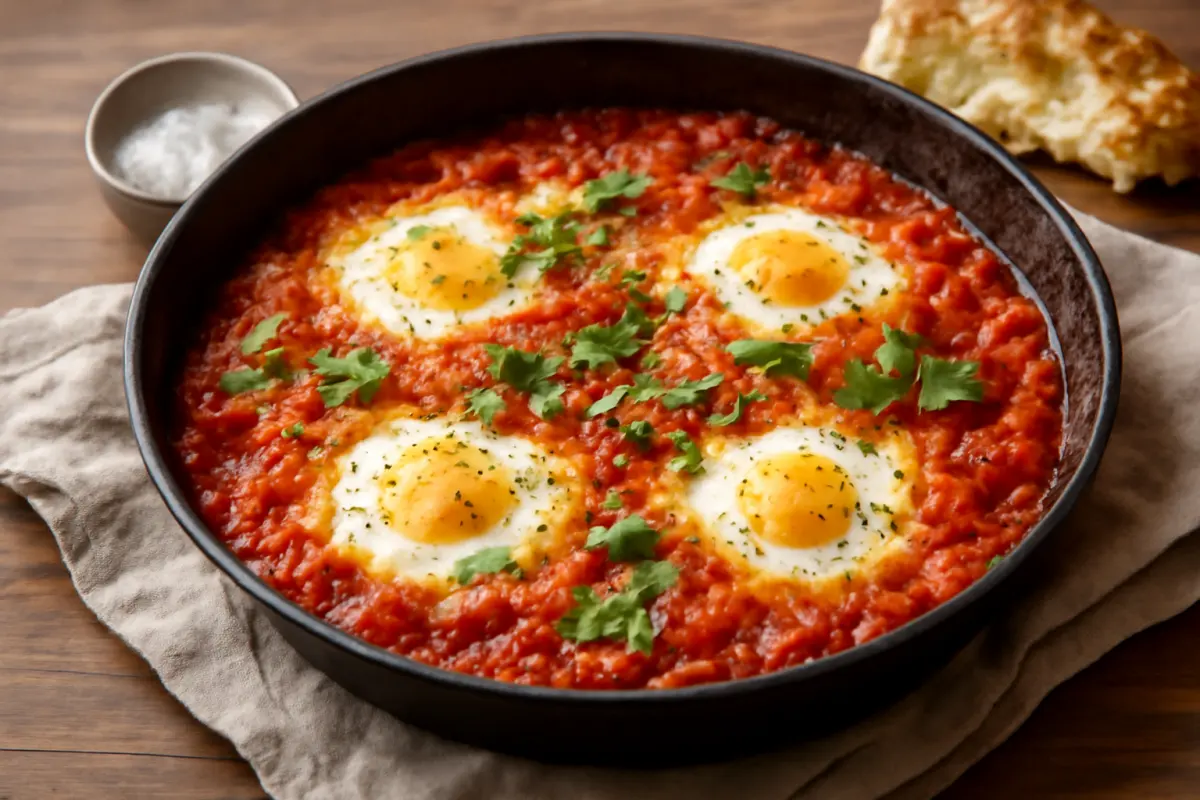
Shakshuka is a one-pan dish of eggs gently cooked in a thick tomato and pepper sauce. This version uses onion, red bell pepper, garlic, cumin, paprika, and chili flakes for a savory sauce with gentle heat.
The key is to reduce the sauce before adding the eggs. If it is watery, the egg whites can spread and the finished dish will taste less concentrated. Serve it straight from the skillet with crusty bread for scooping.
Ingredients
- 2 tablespoons olive oil
- 1 medium yellow onion, finely chopped, about 150 g
- 1 medium red bell pepper, finely chopped, about 150 g
- 3 garlic cloves, finely chopped
- 1 teaspoon ground cumin
- 1 teaspoon sweet paprika
- ¼ teaspoon chili flakes, or more to taste
- 1 can (28 ounces or 800 g) whole peeled tomatoes, crushed by hand, with their juices
- ½ teaspoon fine salt, plus more to taste
- ¼ teaspoon black pepper
- 6 large eggs
- 60 g feta cheese, crumbled, optional
- 2 tablespoons chopped fresh parsley or cilantro
- Crusty bread, warmed, for serving
How to make it
Soften the vegetables. Heat the olive oil in a 10- to 12-inch skillet over medium heat. Add the onion and bell pepper with a small pinch of the measured salt. Cook for 8 to 10 minutes, stirring occasionally, until the onion is translucent and the pepper is soft. The vegetables should look glossy and tender, not browned or crisp.
Bloom the spices. Add the garlic, cumin, paprika, and chili flakes. Stir for 30 to 60 seconds, just until the garlic smells fragrant. Do not let the garlic turn dark, as it can become bitter.
Reduce the tomato sauce. Add the crushed tomatoes, remaining salt, and black pepper. Stir, bring the mixture to a gentle simmer, then cook uncovered for 15 to 20 minutes. Stir every few minutes and scrape the bottom of the pan. The sauce is ready when it is thick enough that a spoon dragged through it leaves a path for a second or two; it should not look watery around the edges. Taste and adjust the salt or chili.
Make spaces for the eggs. Use the back of a spoon to make six shallow wells in the sauce. Crack one egg into a small cup first, then slide it into a well. Repeat with the remaining eggs. Cracking into a cup makes it easier to remove shell pieces and keeps the eggs from breaking against the hot pan.
Cook the eggs gently. Cover the skillet and cook over medium-low heat for 5 to 8 minutes. Check after 5 minutes. The whites should be opaque and set, while the yolks should still jiggle when the pan is gently moved. For firmer yolks, continue cooking for 1 to 3 minutes. If the sauce is bubbling forcefully, lower the heat so the bottoms of the eggs do not overcook before the tops set.
Finish and serve. Remove the skillet from the heat. Scatter over the feta and chopped parsley or cilantro. Let the shakshuka stand uncovered for 1 to 2 minutes; carryover heat will finish loose patches of egg white. Serve immediately with warm crusty bread.
Expert tips
- Use a wide skillet. A broad pan gives the eggs room to cook in a single layer and helps the tomato sauce reduce evenly.
- Reduce before adding eggs. If the sauce is still thin, cook it for a few extra minutes. Eggs added too early can become overcooked while you wait for watery sauce to thicken.
- Control the heat. Medium-low heat produces tender egg whites and runny or jammy yolks. High heat can scorch the sauce and make the egg whites rubbery.
- For less heat, leave out the chili flakes and use sweet paprika. For more heat, add a pinch of cayenne or sliced fresh chili with the garlic.
- Practical substitutions: Use 1½ teaspoons garlic powder only if fresh garlic is unavailable, adding it with the tomatoes rather than blooming it in the oil. Green bell pepper works in place of red, though it has a more vegetal flavor. Crumbled goat cheese can replace feta.
- If the eggs spread, the wells were too shallow or the sauce was too loose. Push the whites gently back toward the yolks with a spoon, then cover and continue cooking.
- If the whites are set but the yolks are too firm, remove the pan from the heat sooner next time. For the current batch, serve it with extra olive oil or bread; the yolks cannot be loosened after they are fully cooked.
Serving and storage
Serve shakshuka hot from the skillet with crusty bread, pita, or flatbread. It also works with a spoonful of plain yogurt and a fresh herb garnish. For a larger Middle Eastern-style spread, serve it alongside hummus or falafel.
Because the eggs continue cooking as the dish stands, serve it soon after cooking for the best texture. Cool leftovers promptly, transfer them to a covered container, and refrigerate within 2 hours. Eat within 3 days and reheat gently in a covered skillet or microwave until hot throughout. The eggs will be firmer after reheating. Freeze the tomato sauce without eggs for up to 3 months; thaw, reheat, and add fresh eggs when serving.
Frequently asked questions
Can I make shakshuka without bell peppers?
Yes. Replace the bell pepper with another 150 g of chopped onion, or add a small chopped zucchini. Cook the replacement vegetable until tender before adding the tomatoes. The flavor will be slightly different, but the method stays the same.
How do I keep shakshuka from being watery?
Simmer the tomato sauce uncovered until it is thick enough to hold shallow wells. Canned tomatoes vary in liquid content, so you may need 5 to 10 extra minutes of reduction. Do not add the eggs until the sauce has thickened.
Can I use canned diced tomatoes?
Yes. Use one 28-ounce (800 g) can and crush some of the pieces with a spoon as the sauce cooks. The final texture will be chunkier than when using whole tomatoes.
How can I tell when the shakshuka eggs are done?
The whites should be opaque and no longer wobble when the pan is gently shaken. The yolks should still jiggle for a runny center. Cover and cook longer if you prefer firm yolks.
Can I prepare shakshuka ahead of time?
Prepare and refrigerate the tomato-pepper sauce for up to 3 days, then reheat it in a skillet and add fresh eggs just before serving. This gives better egg texture than reheating the complete dish.